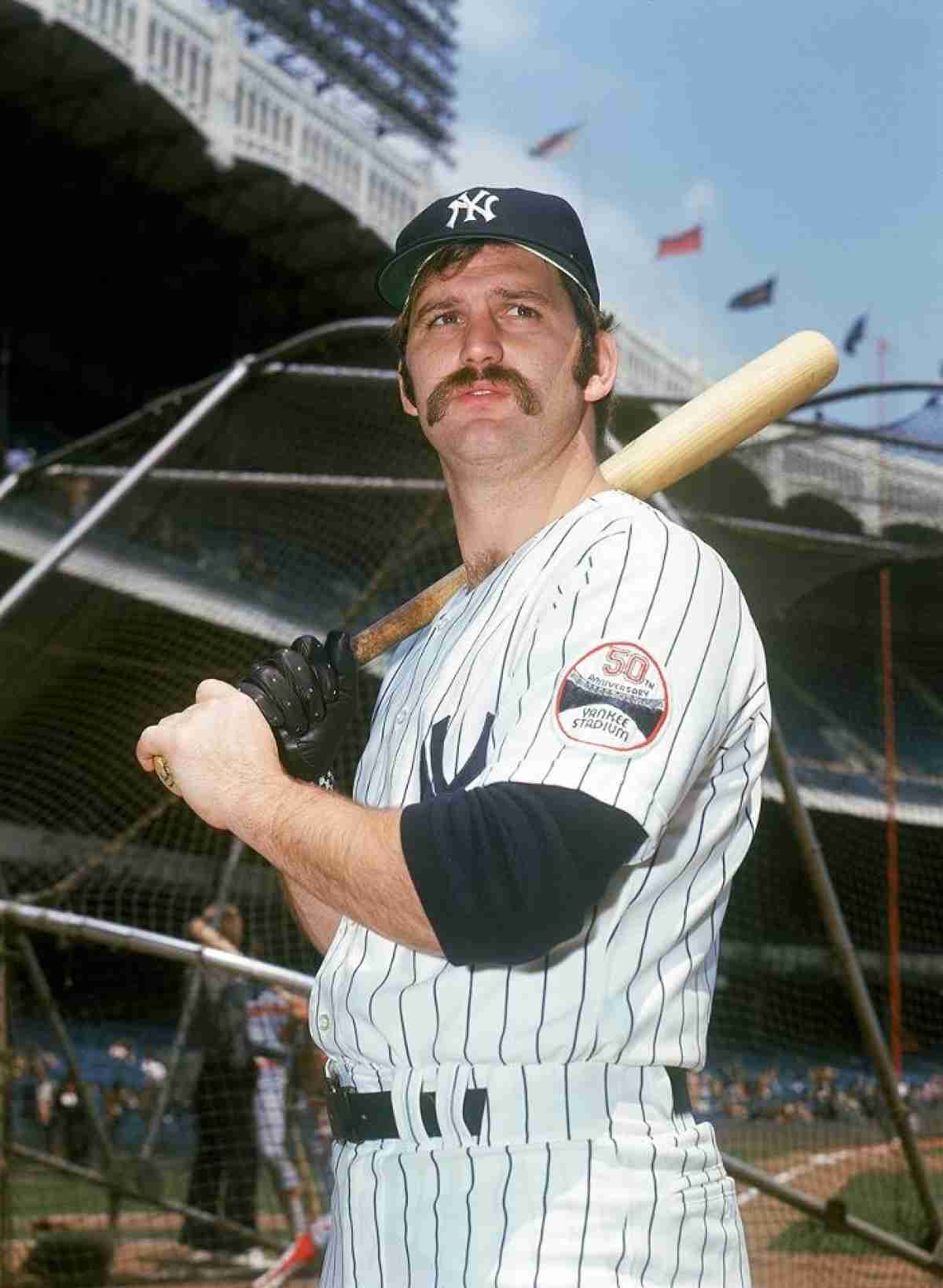
When the Yankees chose Thurman Munson in the first round of the 1968 draft, they were not only selecting a highly skilled catcher from Kent State but also embodying the spirit of a new generation. Munson, a stocky and straightforward individual with a thick mustache, displayed a blue-collar determination that won over the Bronx fans. He played with unmatched fervor, diving into plays behind the plate, and eventually became the first team captain in pinstripes since Lou Gehrig.
His professional ascent was immediate and historic. Stepping into the everyday catching role, Munson earned the 1970 American League Rookie of the Year award after posting an impressive .302 batting average. Over the subsequent decade, he developed a remarkable regular-season record that exemplified a perfect balance of exceptional defensive skills and superior offensive output. He received three consecutive Gold Glove Awards from 1973 to 1975, showcasing an extraordinarily powerful arm that effectively neutralized opposing running plays. At the plate, Munson demonstrated exemplary situational hitting, surpassing the .300 batting average threshold five times and achieving three consecutive seasons with 100 or more RBIs from 1975 to 1977.
The offensive and defensive peak achieved its highest point during the 1976 season. Munson propelled the Yankees into the postseason for the first time in twelve years, batting .302 with 17 home runs and 105 RBIs. His outstanding, leadership-by-example performance earned him the 1976 American League Most Valuable Player award.
As October arrived, Munson truly shined as a big-game hero. He led the Yankees to three straight pennants and two World Series titles in 1977 and 1978, giving opposing pitchers a tough time. He safely reached base in all seven games of the 1977 Fall Classic and posted a remarkable .357 batting average with 22 RBIs over 30 postseason games, handling the biggest moments in baseball with the ease of a casual game in the backyard.
Sadly, an abrupt, catastrophic event in the afternoon transpired, irrevocably shattering the heart of the city. On August 2, 1979, during a routine mid-season rest day, Munson was practicing takeoffs and landings in his private Cessna Citation jet at Akron-Canton Airport in Ohio, seeking to be near his family. The aircraft contacted the treetops and crashed short of the runway, resulting in the instantaneous death of the 32-year-old captain and plunging the entire baseball community into profound mourning.
The immediate local response was an unprecedented wave of reverence. Deeply shaken by the loss of his close friend and leader, owner George Steinbrenner retired Munson’s iconic number 15 jersey on August 4, 1979, and kept his locker vacant, which stood untouched for nearly three decades before entering the Yankees Museum.
Comments powered by CComment