
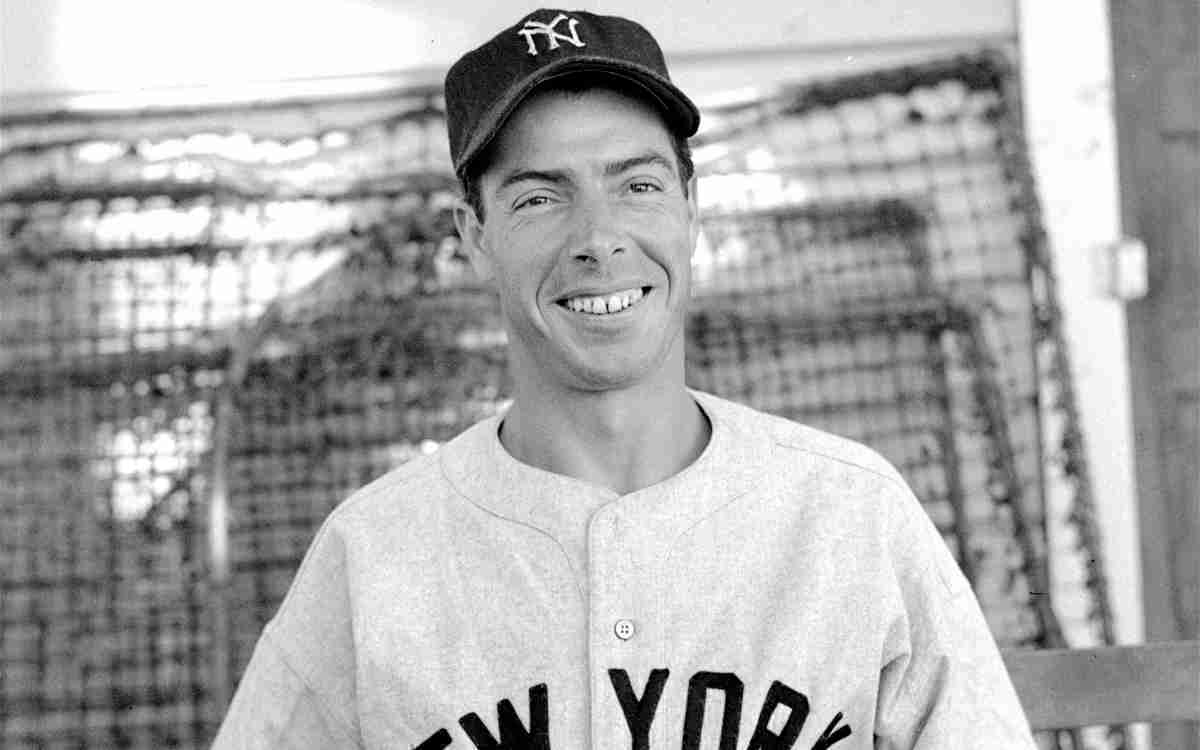



Joe DiMaggio came to the Bronx in 1936, succeeding Babe Ruth’s era, as a graceful and efficient center fielder who became the emblem of the "Yankee Clipper" age. Although his short marriage to Marilyn Monroe in 1954 cemented his status as a pop-culture icon, DiMaggio had already spent thirteen seasons as the strategic driving force behind a dynasty.
Between 1936 and 1942, DiMaggio reached an historic peak, guiding the Yankees to the World Series six times in those seven years, and securing the championship in five of those appearances. He debuted in 1936 as a 21-year-old star, setting a franchise rookie record with 29 home runs and quickly becoming the main run producer after Babe Ruth. By 1937, he was at a career-best peak of effectiveness, leading the American League in home runs (46), runs scored (151), and total bases (418), narrowly finishing second in the MVP voting.
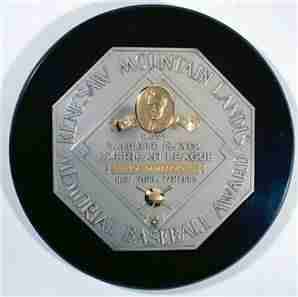
DiMaggio reached the peak of his career in 1939 and 1941, earning two of his three MVP awards early on. In 1939, he won his first batting title with a.381 average, one of the highest in Yankees history. Two years later, he set the still-unmatched 56-game hitting streak, a testament to individual endurance. In a season when Ted Williams batted .406, DiMaggio’s consistent performance and his league-leading stats in RBIs (125) and total bases (348) earned him the 1941 MVP Award. During this period, he was a formidable presence, providing leadership and stability to a lineup that was determined to succeed.
In 1942, the Yankees secured another pennant, although DiMaggio’s individual performance experienced a slight decline to a .305 batting average, marking his lowest at that point. With the onset of global conflict, he elected to pause his professional sports career to enlist in the United States Army Air Forces. At the age of 28, he exchanged his iconic pinstripes for a military uniform, thereby leaving the sport at the peak of his physical condition. Although he eventually returned to attain new heights in the late 1940s, those initial seven seasons established a statistical record that many players would find fortunate to achieve within twenty campaigns.
After returning from the war in 1946, DiMaggio found himself in a league that was missing its shining star. As the "Yankee Clipper" gradually got back into his groove, his final chapter in baseball was marked by a personal struggle against his own limits. Despite missing part of the 1947 season due to the removal of a three-inch bone spur from his heel, he managed an inspiring comeback that earned him his third MVP Award. In one of baseball’s most talked-about races, he narrowly beat Ted Williams by just one point—even though Williams had achieved the Triple Crown, thanks to DiMaggio’s crucial, high-pressure contributions that helped the Yankees win the pennant. That season, he finished with a .315 batting average and 97 RBIs, leading to his sixth World Series title after a dramatic seven-game win over the Brooklyn Dodgers.
By 1948, DiMaggio reached a statistical summit, proving he was still a tactical giant at the plate. He led the American League in home runs (39) and RBIs (155), while batting .320, finishing second in MVP race. This performance earned him the first $100,000 contract in 1949, making him the highest-paid player in history. However, a recurring heel injury cost him the first 65 games. His June return was cinematic; arriving in Boston without spring training, he hit four home runs in three games against the Red Sox, boosting team morale and fueling another championship.
After the 1951 World Series, at 36, his body finally showed signs of wear. Recurring injuries to his knees and shoulders had slowed down his legendary swing, bringing his batting average down to a career-low .263. Despite this, he proved his reliability in his final postseason by hitting a home run in Game 4, helping him secure his ninth World Series title. Instead of accepting a $100,000 offer for a part-time role in 1952, he chose to step away with his dignity still intact, famously stating that he could no longer deliver the level of baseball his fans deserved.
DiMaggio compiled 2,214 hits, 361 home runs, and a .325 batting average. The Yankees retired his number 5 in 1952, and DiMaggio was inducted into the Hall of Fame in 1955.

Comments powered by CComment