
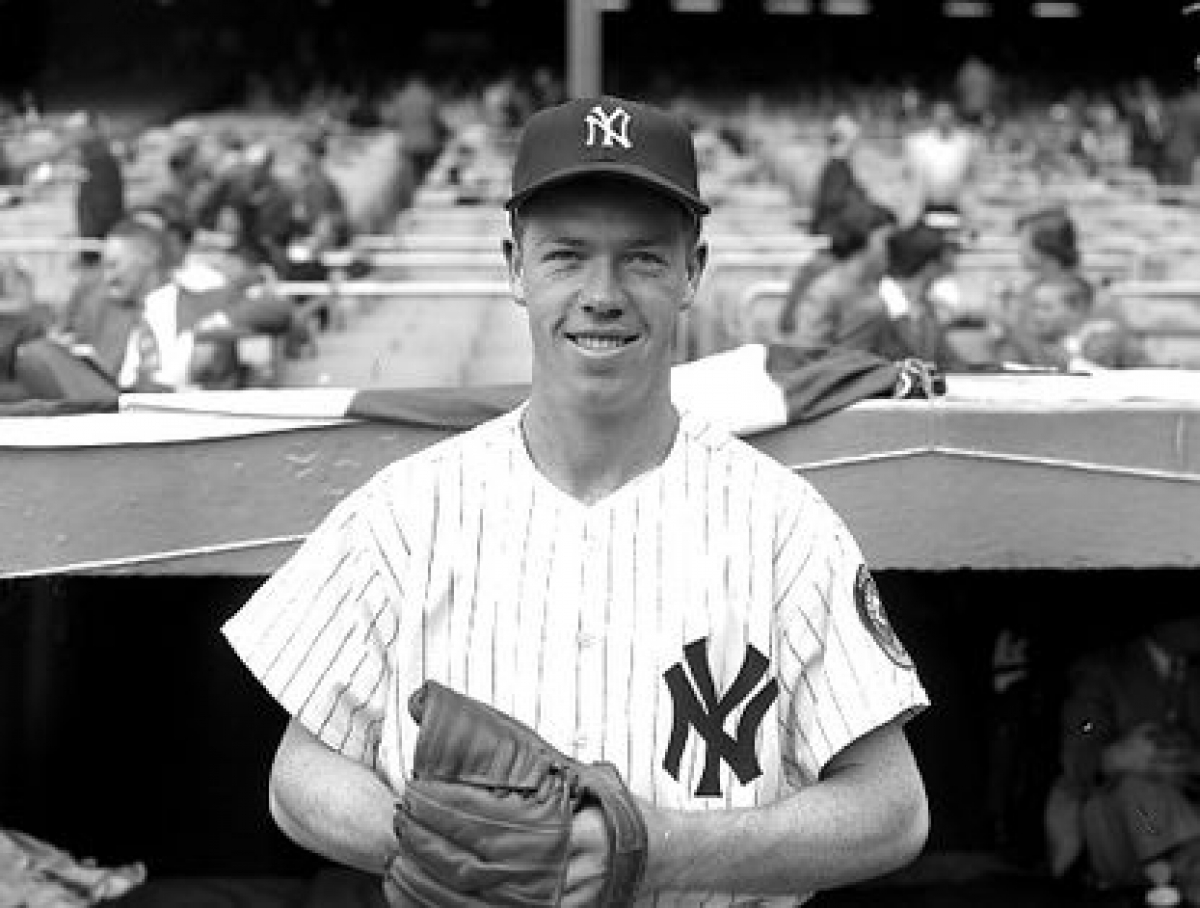



In 1951, Gil McDougald walked straight into a transitional changing of the guard, playing alongside an aging Joe DiMaggio and a raw rookie named Mickey Mantle. Standing out with an incredibly unorthodox batting stance, holding the bat remarkably low with an open, slouching posture, the 23-year-old San Francisco native immediately proved that classic form mattered far less than pure, high-leverage execution.
McDougald was a key tactical asset for manager Casey Stengel, leveraging his defensive flexibility to serve as the backbone of the infield during the team's mid-20th-century success. He didn't just fill in gaps; he played at an elite level across three top-tier positions, second base, third base, and shortstop, adjusting seamlessly to meet the team's strategic needs. Advanced statistics strongly support his mastery of these roles, ranking him among the American League's top ten in defensive bWAR in eight of his ten major league seasons. Notably, he finished in the top four five times and reached a defensive peak in 1957, when he led the league in defensive value.
While his defensive flexibility maintained a pristine roster, McDougald offered a dependable and productive presence at the plate. He secured the 1951 American League Rookie of the Year honor by posting an impressive .306 batting average, capped by a historic Grand Slam in Game 5 of the World Series against the Giants. He then recorded eight straight seasons with double-digit home runs, demonstrating a deceptive power suited to Yankee Stadium's spacious gaps. His offensive prowess truly shone in the 1957 season, where, in addition to his elite defense, he led the American League with 9 triples and finished with a solid .289 average, earning a top-ten spot in MVP voting.
More than anything, McDougald was a quintessential winner who treated the postseason like a routine extension of the summer calendar. A five-time All-Star, he anchored the diamond for eight American League pennant-winners, capturing five World Series championship rings (1951, 1952, 1953, 1956, and 1958). His calm demeanor and selfless, team-first approach made him an immensely popular figure throughout the New York clubhouse and among the stadium faithful.
Rather than hanging on past his prime to chase individual milestones as his physical baseline naturally slowed, he chose to walk away from the game on his own terms, following the 1960 schedule and retiring at the relatively young age of 32 to focus on his family and business ventures. He left behind a lifelong, single-uniform legacy defined by 1,291 hits, 112 home runs, and a lifetime .276 batting average.

Comments powered by CComment