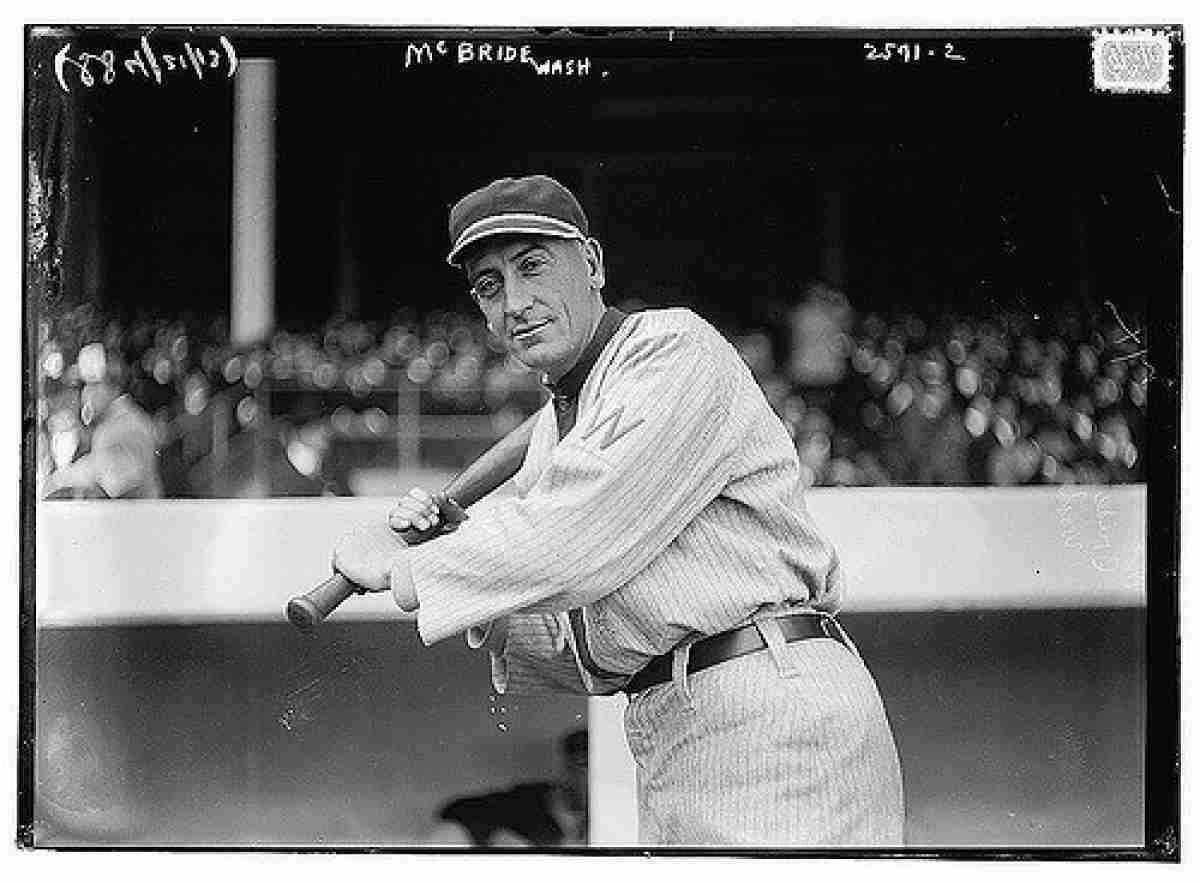
George McBride assumed the shortstop role in Washington in 1908, serving as a reliable player who spent over ten years anchoring the infield behind Walter Johnson. During an era characterized by rugged field conditions and a focus on small-ball, McBride was a top-tier defensive mainstay.
McBride's tenure was marked by a defensive run nearly historic in magnitude. Well before modern analytics could quantify it, he excelled on the field, leading the American League in Defensive bWAR four times. He recorded seven seasons with a Defensive bWAR over 2.0, including two outstanding seasons surpassing the 3.0 threshold. His positioning and range earned such respect that he remains 25th all-time in career Defensive bWAR in Major League history, a clear sign of a player who turned run prevention into an exact science.
Conversely, McBride was a non-threat at the plate. He was a textbook "good glove, no hit" player, never batting higher than .235 in any season during his entire time in Washington. Yet his defensive value was so immense that the league couldn't ignore him; he received MVP votes for four consecutive years from 1911 to 1914, peaking with a fourth-place finish in 1912.
McBride played less frequently from 1917 to 1920, playing in fewer than 20 games in the last three seasons. As a Senator, McBride compiled 1,114 hits, a .219 batting average, and an elite 23.3 Defensive bWAR.
Comments powered by CComment