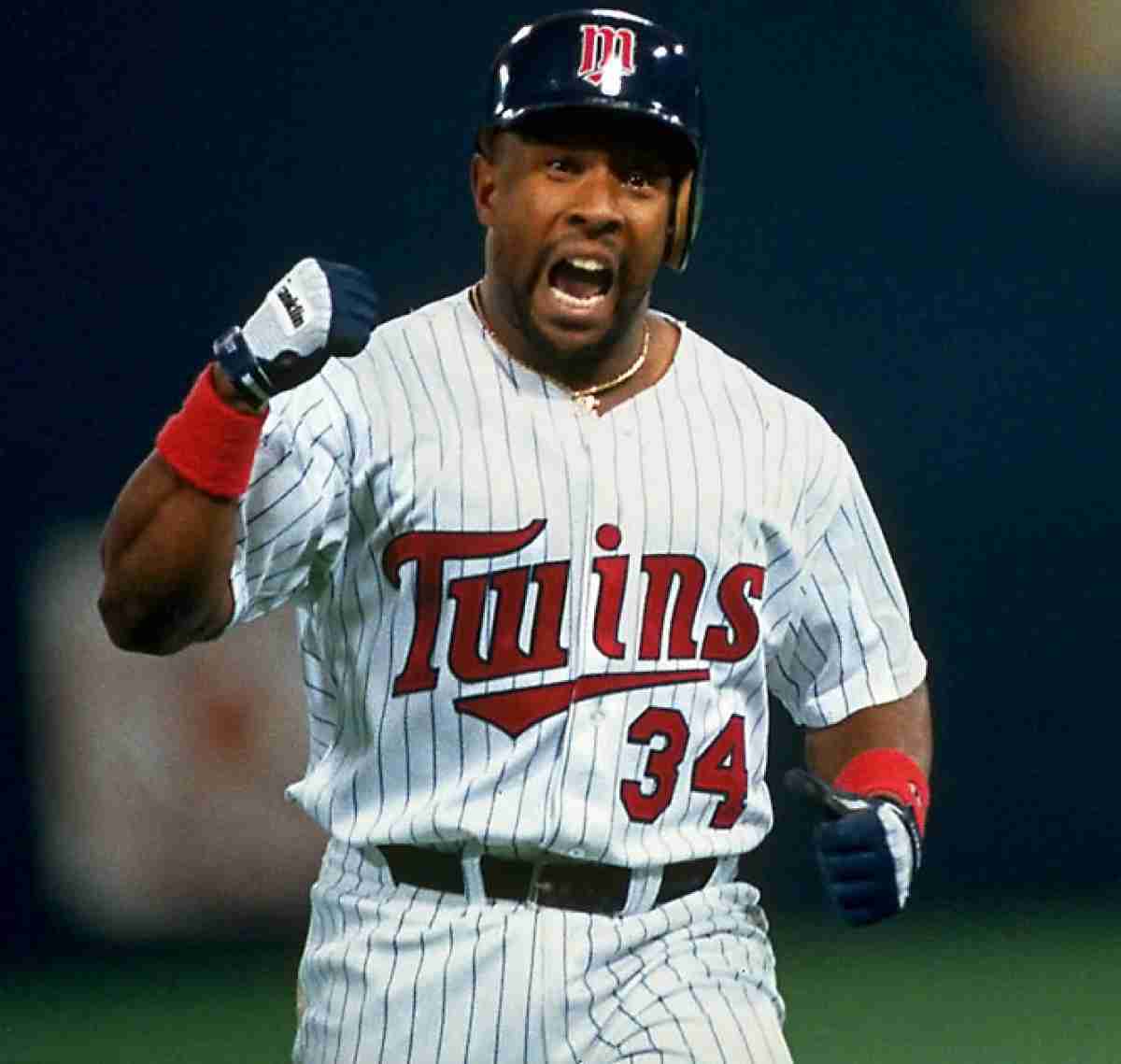
Kirby Puckett arrived in Minnesota in 1984 as a compact, energetic center fielder who famously recorded four hits in his major league debut. While his husky 5'8" frame defied the traditional mold of a speed-first outfielder, he quickly evolved into the most iconic and beloved figure in the history of the Twin Cities. For twelve seasons, all spent in a Twins uniform, he provided a brand of high-volume hitting and Gold Glove defense, standing as the definitive catalyst behind the franchise's two world championships and the undisputed heart of the organization during its most successful era.
After showcasing his talent with a 200-hit campaign in 1986, Puckett proved his skill at spotting gaps, leading the American League with 207 hits in 1987. He quickly became a key player and the emotional driving force of a team that stunned baseball by winning the 1987 World Series. This early period set a strong foundation for his career, marked by contagious enthusiasm and a particular talent for performing in crucial moments.
In 1991, Puckett achieved remarkable individual and team success, with a postseason performance that became legendary in Minnesota. During Game 6 of the World Series, facing elimination, he famously told his teammates to "jump on his back." He demonstrated exceptional all-around skill by making a leaping catch at the fence to prevent a home run and then hitting a walk-off homer in the 11th inning to send the game to a Game 7. This streak of excellence transformed him into a national icon, solidifying his legacy with a second world championship and a 1989 Batting Title, when he achieved a career-high batting average of .339.
His tenure featured a remarkable accumulation of hardware that reflected his dominance on both sides of the ball. Between 1986 and 1995, he was a perennial All-Star selection, earning six Gold Gloves for his defensive mastery in center field and six Silver Slugger Awards. He left behind a statistical footprint in Minnesota that includes 2,304 hits and a stellar .318 career batting average. While his career was tragically cut short in 1996 by a sudden loss of vision due to glaucoma, he had already amassed a lifespan of achievement that made him the franchise leader in hits, doubles, and total bases at the time of his retirement.
In 2001, when Puckett was inducted into the Baseball Hall of Fame on his first year of eligibility, it served as a final punctuation on a journey that saw him remain a "Lifer" in Minnesota. He walked away from the game as a high-caliber legend, honored with the retirement of his number 34 in 1997. Puckett was also part of the inaugural Twins Hall of Fame Class in 2000
Comments powered by CComment