
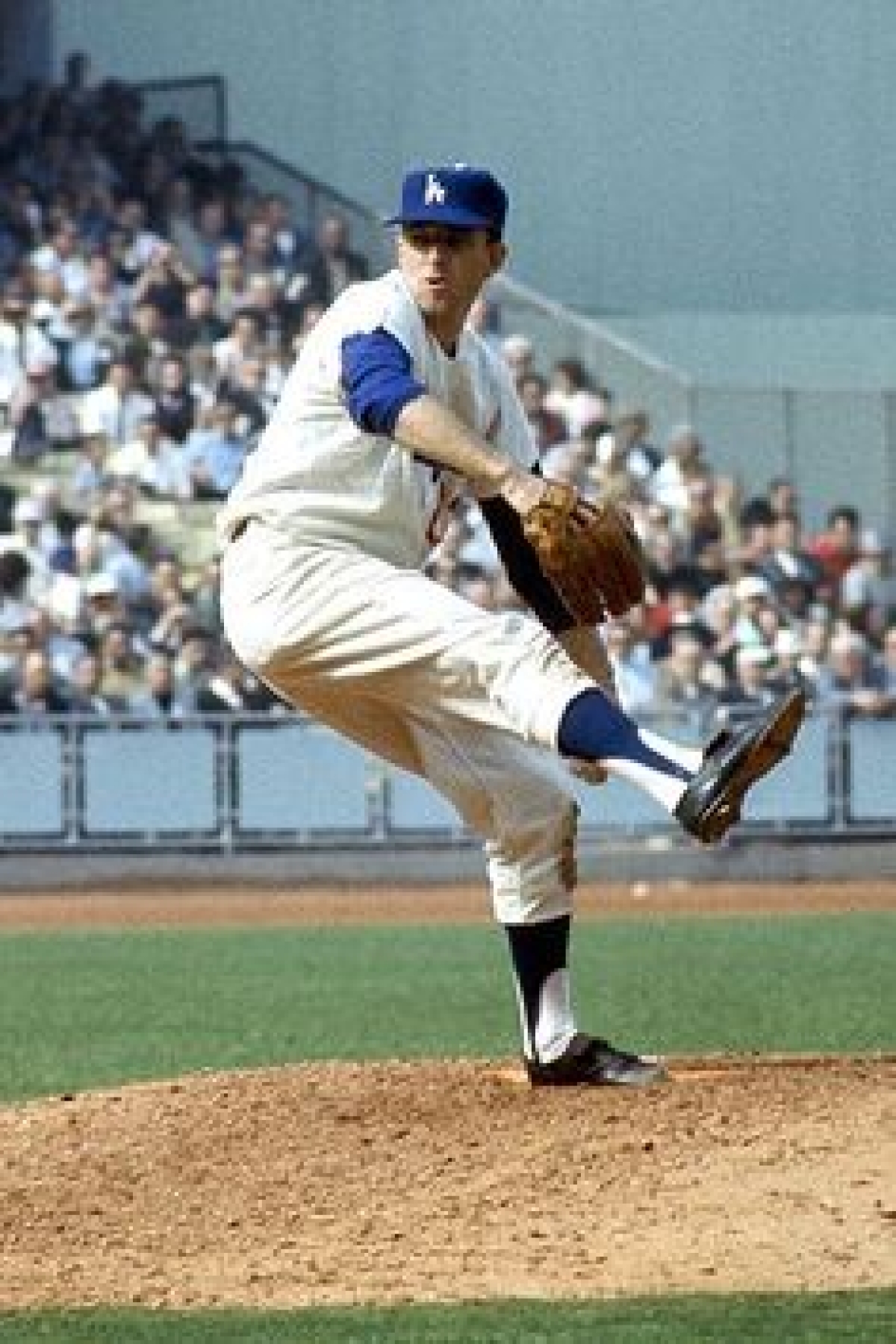

In December 1964, Claude Osteen became a Los Angeles Dodger as the centerpiece of a seven-player trade that sent power-hitter Frank Howard to the Washington Senators. While the Dodgers were trading away a mountain of home runs, they were acquiring a "marathon man" of a southpaw who would spend the next decade defining durability in a rotation that already featured legends.
In his first season on the West Coast, Osteen reached a high point during the World Series against the Twins. When the Dodgers trailed 2-0, he started Game 3 with a five-hit shutout that shifted the series momentum. That summer, he commanded the strike zone, winning 15 games and achieving a career-high 162 strikeouts. Despite occasional hits allowed, he showed resilience, pitching at least 240 innings in nine of ten seasons with the team, becoming the staff's backbone.
During the late 1960s and early 1970s, Osteen enjoyed seven seasons with at least 15 wins for the Dodgers, reaching his peak in 1969 and 1972, with 20 wins in each year. He achieved a historic milestone by being named to three All-Star teams (1967, 1970, 1973), demonstrating that a control-oriented left-handed pitcher could still attain greatness in an era increasingly focused on velocity. His tenure was distinguished by his specialized ability to complete what he started, recording 118 complete games as a Dodger.
After the 1973 season closed, he was traded to the Houston Astros in an exchange that brought the Dodgers Jim Wynn. With Los Angeles, Osteen compiled a 147-126 record, a 3.06 ERA, and 1,162 strikeouts.

Comments powered by CComment