
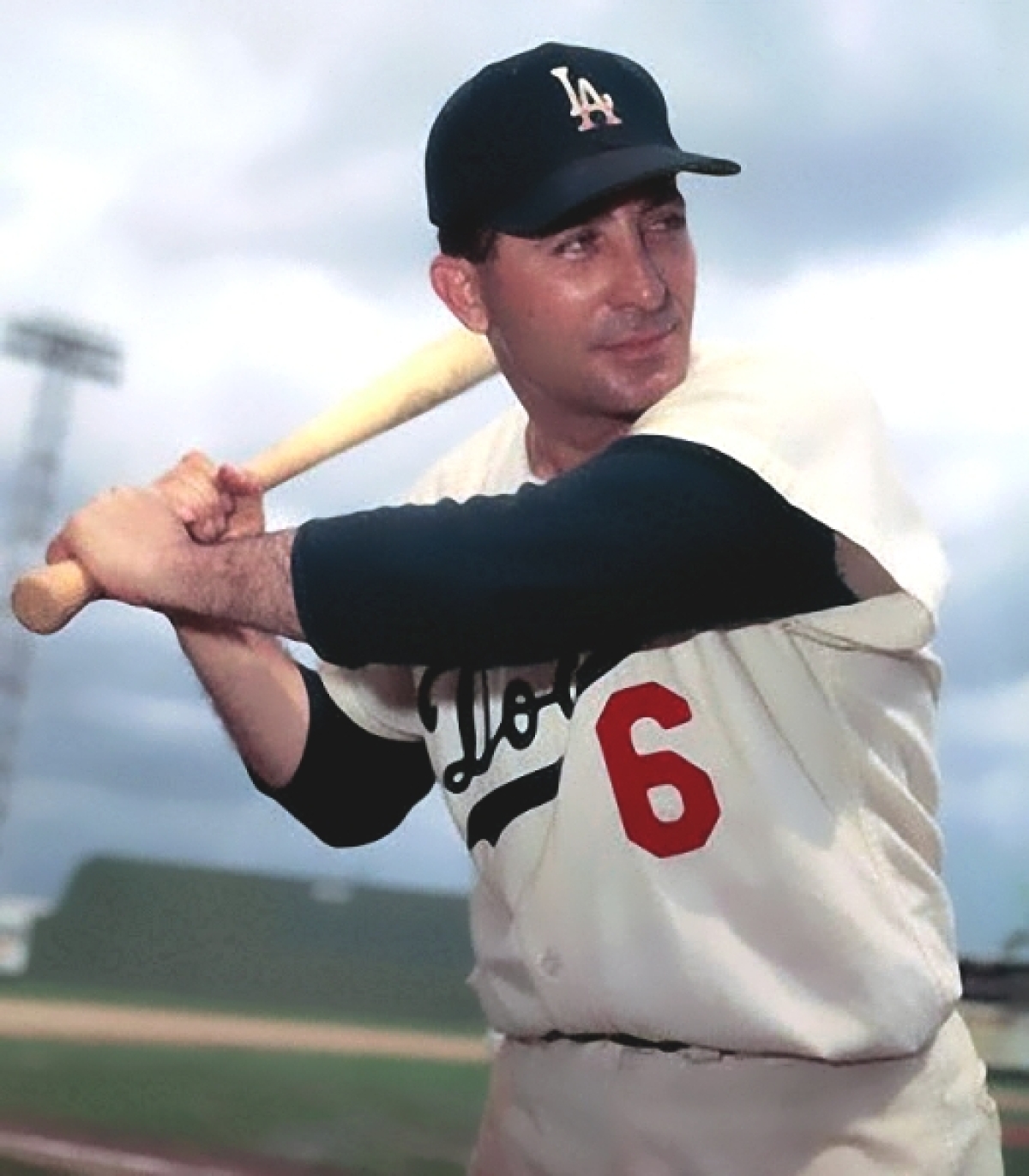


Following his military service, Carl Furillo debuted in Brooklyn in 1946. He was a right-handed outfielder known for his quiet professionalism unlike the more famous "Boys of Summer." Nicknamed "The Reading Rifle" for his feared arm, he was the master of the high right-field wall at Ebbets Field.
While Furillo initially commenced his career in center field, he achieved a pinnacle of versatility upon transitioning to right field, where he acquired the skill to interpret nearly 300 different trajectories of baseballs rebounding from the complex surface of the Ebbets Field walls. He owned the position, recording at least 10 assists in nine successive seasons and twice leading the league in this category. By 1949, he reached a new level of offensive excellence, batting .322 with 106 RBIs and finishing sixth in the MVP voting, thereby substantiating his capabilities beyond defensive prowess.
In 1953, Furillo secured the National League Batting Title with a .344 batting average, representing the highest mark achieved by a right-handed Dodger in the modern era at that time. Although he suffered a broken hand in a brawl against the Giants, which effectively ended his regular season in September, he notably returned for the Fall Classic, thereby reinforcing his reputation as a significant contributor in high-stakes games. Furthermore, he was a consistent presence for the 1955 World Series champions, hitting a career-high 26 home runs and playing a pivotal role in Brooklyn's first world championship.
After moving to Los Angeles with the team and contributing to the 1959 World Series victory, Furillo tore a calf muscle early the next year. He was released by the organization in May, sparking a lengthy legal battle in which Furillo claimed the team released him to dodge paying his 15-year pension. Although he won a court settlement, the dispute essentially blacklisted him from professional baseball.
He exited baseball with 1,910 Hits, 192 Home Runs, and a Batting Average of .299.

Comments powered by CComment