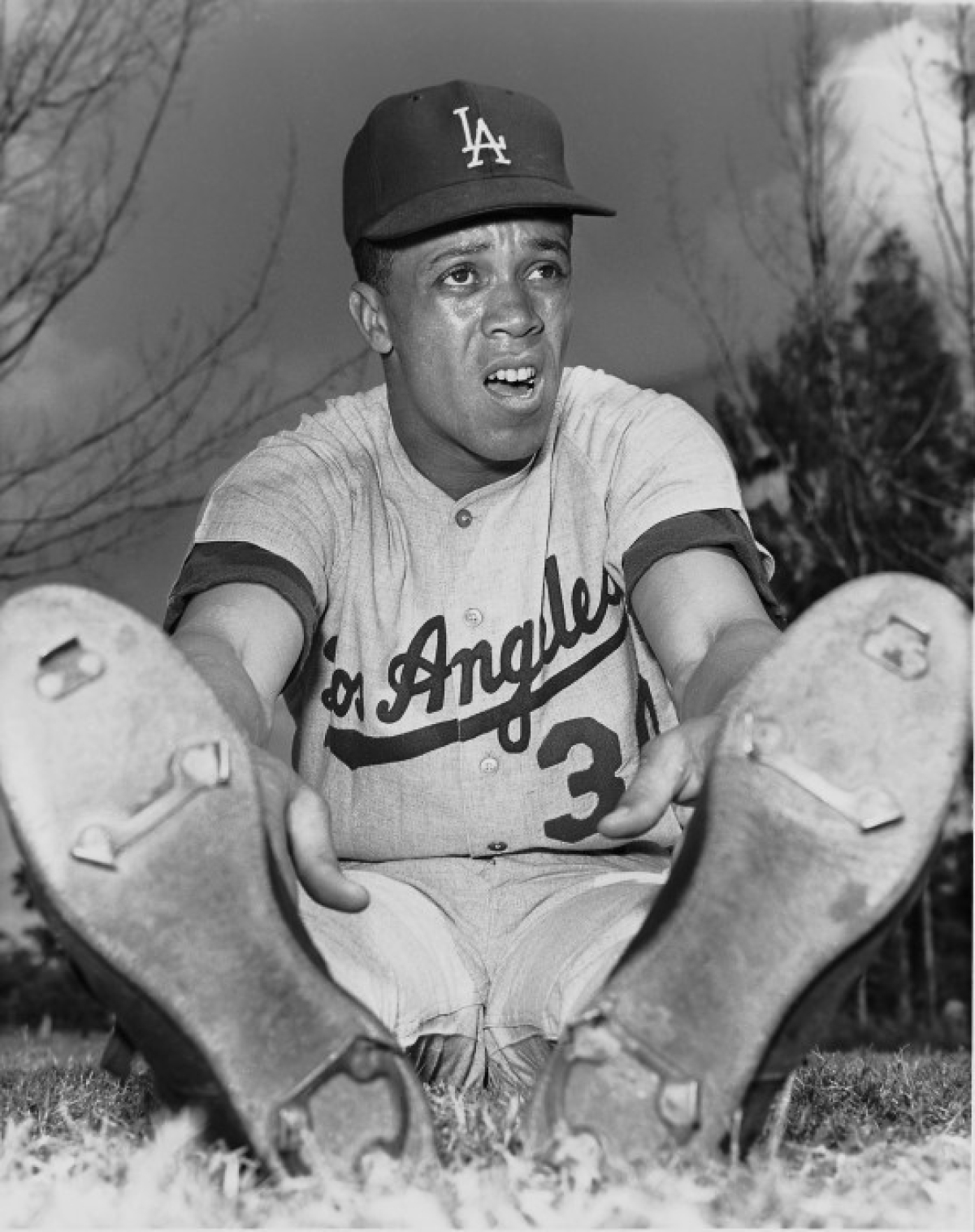
A switch-hitting shortstop who spent nearly a decade in the minor leagues before being granted an opportunity, Maury Wills finally made it to the Majors in 1959, and once he secured his place in the lineup, he operated as the most disruptive force on the basepaths since the Deadball Era.
In 1960, during his first full season as a regular player, Wills led the National League with 50 stolen bases, the highest total in the senior circuit in nearly forty years. He demonstrated complete mastery of the lead-off role in the early 1960s, securing six consecutive stolen base titles and establishing that his athleticism was a fundamental asset for a team primarily focused on pitching and defense. His career reached its zenith in 1962, when he became the first player in the modern era to surpass the century mark with 104 stolen bases, thereby earning the National League Most Valuable Player (MVP) Award and the inaugural All-Star Game MVP.
Wills was the catalyst for the Dodgers' 1963 and 1965 world titles. During the 1965 campaign, he recorded 94 stolen bases and scored 92 runs, serving as the spark that allowed the "Koufax and Drysdale" era to thrive with minimal run support. While he faced criticism for a below-ideal walk rate and a difficult relationship with some media members, his on-field efficiency remained reliable; he earned two Gold Gloves and was a seven-time All-Star.
During a Japan team exhibition tour, Wills, nursing a knee injury and frustrated, jumped the tour without permission to go home. The organization saw this as a major breach of loyalty, leading owner Walter O'Malley to trade Wills to the Pirates in December 1966 for Bob Bailey and Gene Michael. Despite a brief stint in Pittsburgh and Montreal, he was traded back to the Dodgers in 1969 to lend veteran leadership for his last four seasons.
Wills had 1,732 Hits and 490 Stolen Bases in Dodger Blue, and in 2019, Wills was one of four players awarded plaques in the stadium as Legends of Dodgers Baseball.
Comments powered by CComment