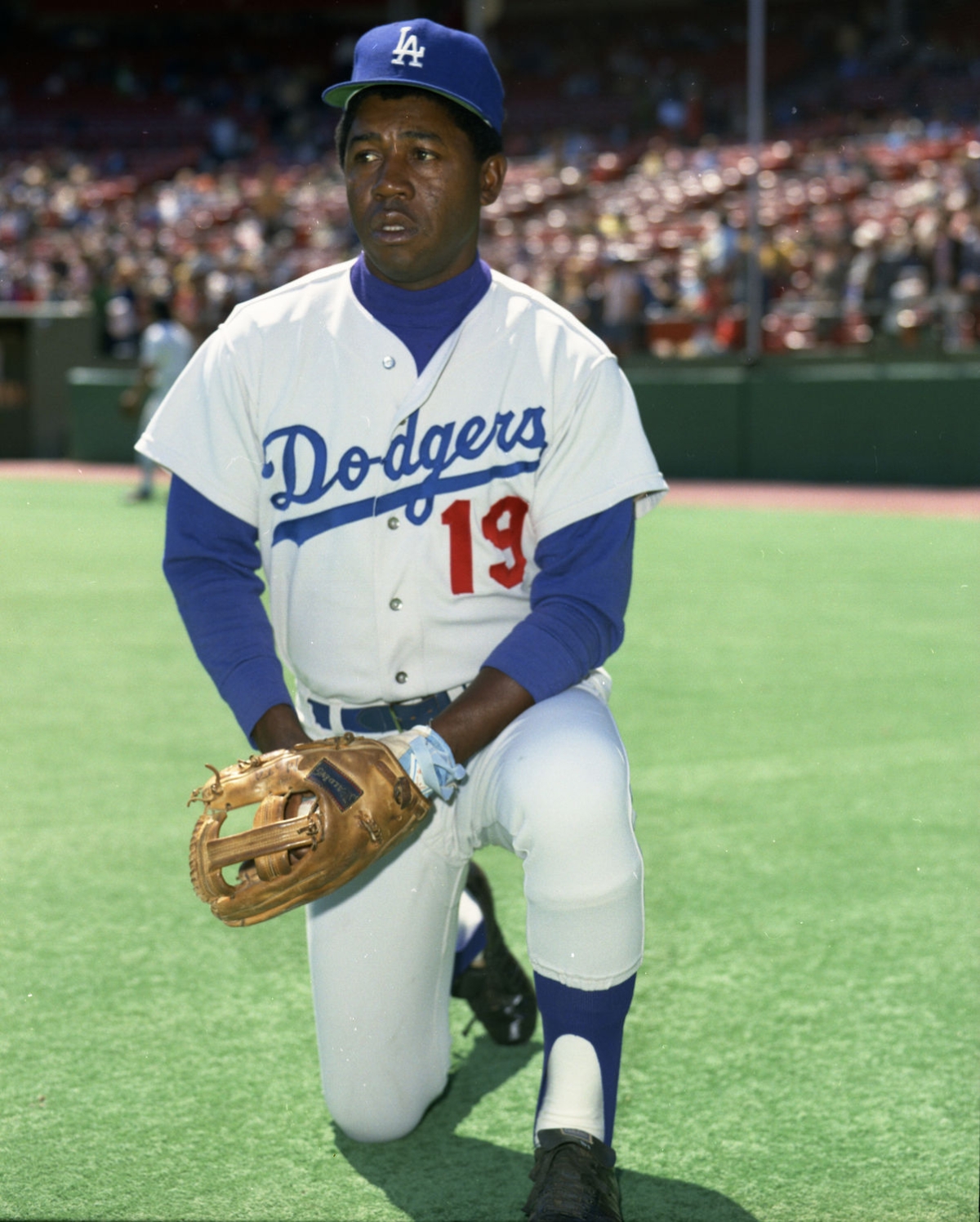
Jim Gilliam joined Brooklyn in 1953 as the last piece of the "Boys of Summer" puzzle, a versatile switch-hitter who enabled Jackie Robinson to move to third base. Quiet and tactically selfless, "Junior" served as the vital glue for the team during its significant transcontinental transition.
In 1953, Gilliam achieved a significant milestone as a debutant, leading the National League with 17 triples and accumulating 125 runs, which earned him the Rookie of the Year award. He promptly established a foundation of consistent excellence as the team's chief table-setter, recording three consecutive seasons with no fewer than 100 runs. By 1955, he demonstrated high-leverage on-base performance, evidenced by a .469 on-base percentage in the Fall Classic, that ultimately contributed to the Dodgers’ first and sole World Series championship in Brooklyn. In 1956, Gilliam was selected as an All-Star for the first time, batting .300 and leading the NL in Total Zone Runs as a second baseman. He excelled as the lead-off man, with a fourth straight 100-run season and finishing fifth in MVP voting.
Gilliam reached a new level of versatility after the franchise moved to Los Angeles in 1958. In 1959, he showed his keen batting eye, leading the National League with 96 walks and anchoring a young team that won its first West Coast title. His position shifted between second base, third base, and the outfield, but his efficiency stayed steady; he earned All-Star honors in Brooklyn (1956) and Los Angeles (1959) and finished in the MVP top ten twice. As the 1960s began, he transitioned into a specialized role as the "accomplice" to Maury Wills; batting second, he famously took pitches and fell behind in the count, giving Wills the freedom to dismantle opponents on the basepaths. This tactical selflessness fueled the Dodgers' high-speed offense and led to another World Series victory in 1963, where he played a reliable hand in the sweep of the Yankees. He reached his absolute summit of defensive value in Game 7 of the 1965 World Series, making a lunging, backhanded stab of a Zoilo Versailles grounder to save the game for Sandy Koufax.
Gilliam joined the coaching staff in 1966, but due to injuries on the team, the organization activated him in May, and the 36-year-old veteran responded by batting .280 over 111 games. He went back to coaching and was in that capacity when he passed away from a cerebral hemorrhage just before the start of the 1978 World Series. The Dodgers honored Gilliam by retiring his number 19 two days after.
While Gilliam might not be considered Hall of Fame worthy, he should have at least been on the ballot when he was eligible in 1972. With the Dodgers, Gilliam accumulated 1,889 hits with 203 stolen bases and a .265 batting average.
Comments powered by CComment