
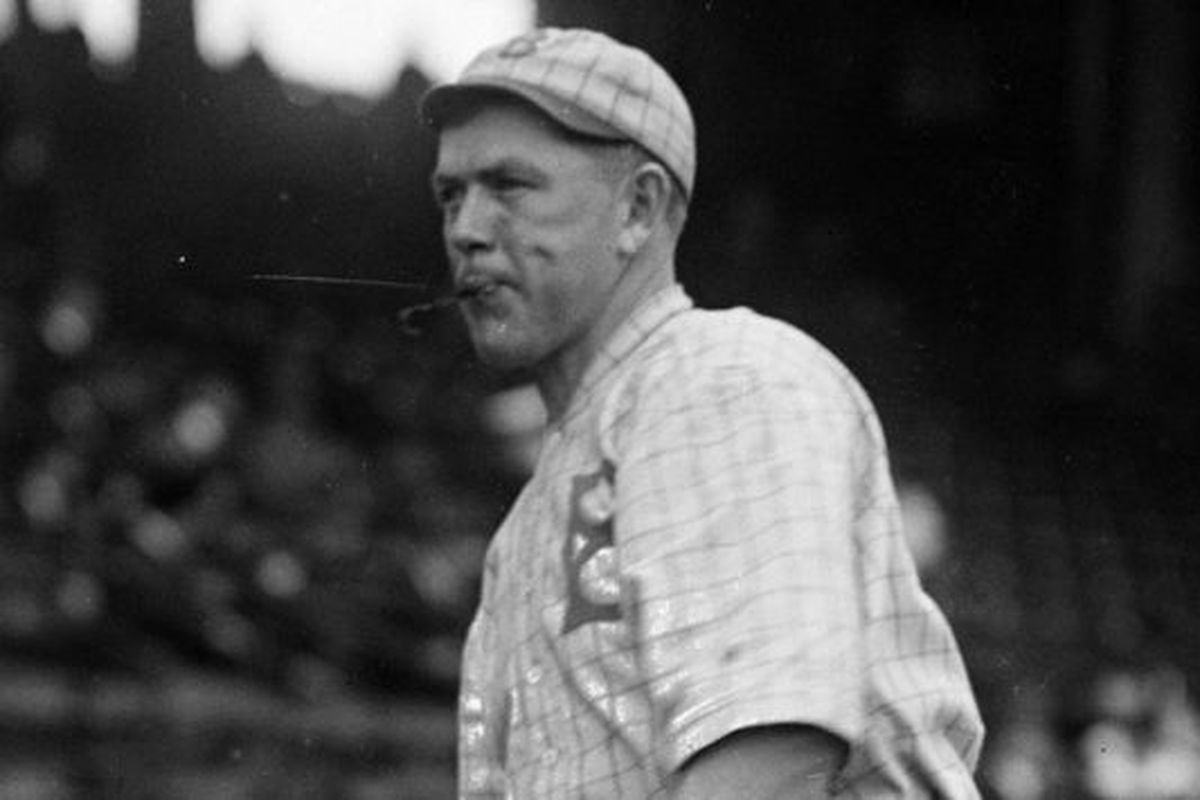


The MLB career of Nap Rucker began in 1907, a high-velocity southpaw who stepped onto the mound for a franchise still searching for its footing. Pitching for teams known as the Superbas and the Robins, Rucker operated as a specialized workhorse during the Deadball Era, frequently outclassing the struggling squads behind him. For a decade in Brooklyn, he provided a dominant arm that was often obscured by a lack of run support, standing as a high-quality pillar for a franchise that was nearly 180 games below .500 during his tenure, even when he wasn't involved in the decision.
In 1908, he displayed a masterclass in run prevention by tossing the first no-hitter in franchise history against the Boston Doves, a 14-strikeout masterpiece that recorded a 101 Game Score, a mark that went unequaled by a Dodger until Sandy Koufax’s perfect game in 1965. In 1910, he led the league in innings pitched (320.1), complete games (27), and shutouts (6). Despite this herculean effort, he finished with an 18-loss record, a testament to the specialized futility of the teams he fronted. He followed this with a career-high 22 wins in 1911, posting a season in which he led the league in bWAR among pitchers (8.7). Remarkably, despite being arguably the most valuable player in the league that year by modern metrics, he received zero votes for the inaugural Chalmers Award (the era's MVP), as the writers prioritized the bats of winning teams over a dominant lefty on a 64-win club.
Known as one of the fastest pitchers of his day, Rucker showed a specialized resilience by adopting a knuckleball later in his career after his velocity began to fade. Between 1907 and 1913, he was a tactical mainstay who consistently finished in the top ten for Pitcher bWAR, twice leading the entire league in that category.
His career was cut short by arm fatigue that led to his retirement at just 31. After pitching over 2,300 innings of intense play, his effectiveness declined, and he made his last appearance in 1916, the same year the "Robins" won the National League Pennant. He finished with a 134-134 record, but his impressive 2.42 ERA underscores his true dominance.

Comments powered by CComment