
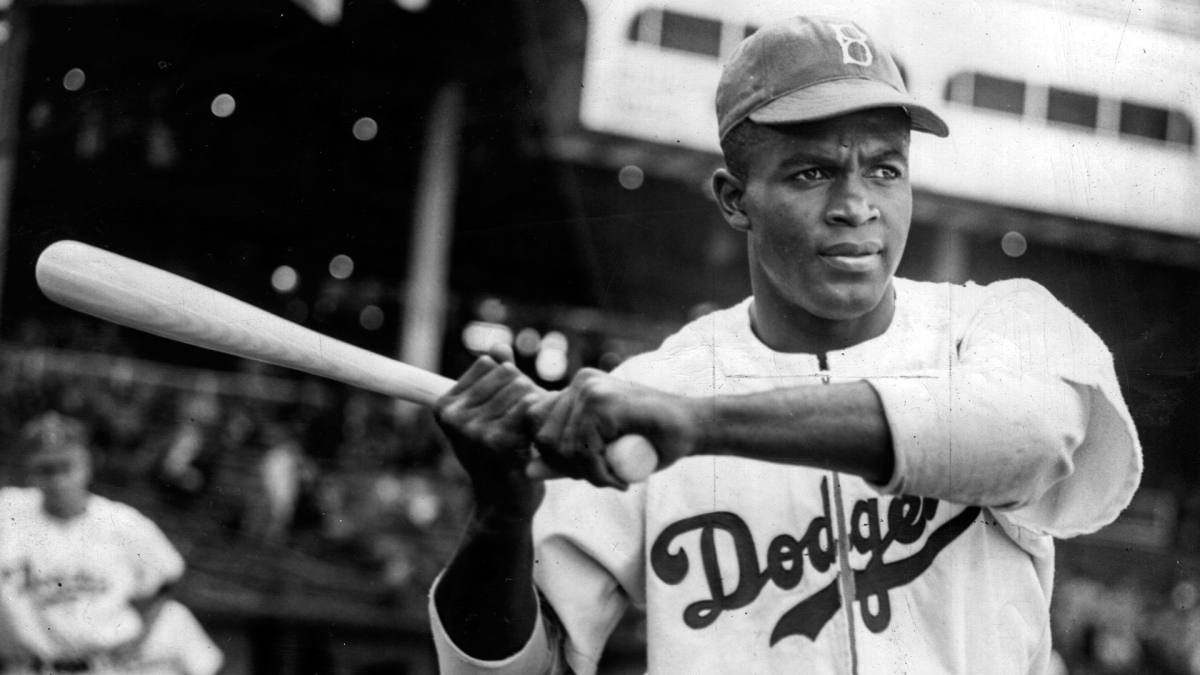



Jackie Robinson arrived in Brooklyn in 1947 as the hand-picked pioneer of Branch Rickey, a 28-year-old rookie carrying the weight of a fractured nation on his shoulders. While his arrival was a seismic social event, he quickly established that his presence was justified by elite, multi-dimensional talent. For ten seasons in a Dodger uniform, he provided a brand of high-stakes play that blended a crisp batting average with aggressive baserunning, standing as a foundational cornerstone for the most successful era in the franchise's Brooklyn history.
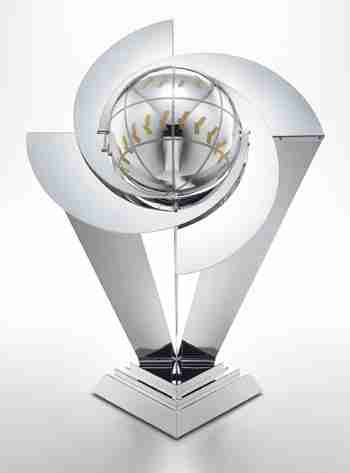
The initial chapter of his tenure was a masterclass in mental and physical fortitude. Debuting at an age when many players are already in their prime, Robinson navigated a barrage of racial hostility while maintaining a professional focus that secured him the inaugural Major League Baseball Rookie of the Year Award. He batted .297 and led the National League with 29 stolen bases in 1947, immediately proving that his five-tool skillset could translate to the highest level. This entry into the league served as a harbinger of a peak that would see him become one of the most versatile and feared offensive threats in the game.
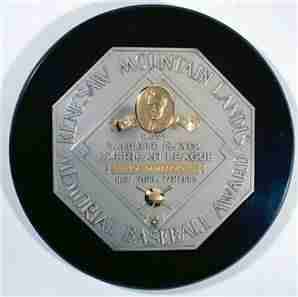
Robinson reached a remarkable ceiling in individual production during the 1949 campaign, a season in which he led the National League with a .342 batting average and 37 stolen bases. He earned the National League MVP that year, becoming the first Black player to receive the honor while recording career highs in hits (203) and RBIs (124). His impact extended beyond the box score; he was a disruptive force on the paths, famously rattling pitchers with an ability to steal home that kept opponents in a constant state of unease. This brilliance anchored a lineup that reached the World Series, further solidifying his status as a premier superstar.
Between 1947 and 1953, he never finished a season with a batting average below .296, consistently recording an on-base percentage over .400. He was a defensive standout who made over 140 starts at four different positions, first base, second base, third base, and left field, providing a flexibility that allowed the Dodgers to maximize their roster depth. This steady production and reliability translated into a 61.8 bWAR, a mark that currently ranks as the third-highest in franchise history.
The later stages of his career featured a shift toward a leadership role as injuries and age began to limit his explosive speed. While his power numbers remained steady, his value became increasingly tied to his presence in a clubhouse that was hungry for a championship. Everything culminated in the 1955 season, where his veteran guidance helped lead the "Boys of Summer" to their first World Series title over the New York Yankees. Though his individual stats were in decline, his grit was on full display during Game 1 when he famously stole home, an iconic moment that ignited the Dodgers' path to a championship.
The trajectory of his playing days concluded following the 1956 season when the club attempted to trade him to the rival New York Giants. Rather than donning the uniform of his greatest enemy, Robinson opted to retire and pursue business opportunities, ensuring his entire major league journey occurred in Dodger Blue. He left behind a statistical footprint that includes 1,518 hits and a career .311 batting average, figures that reflect a Hall of Fame career condensed into just one decade. He remained a foundational figure in American history long after his final at-bat, becoming a first-ballot Hall of Famer in 1962.
The longevity of his career was limited by the era's prejudices, yet the mark he left in Brooklyn remains the most significant in the sport's history. Departing with six All-Star selections and a legacy that transcends the game, his number 42 was eventually retired across all of Major League Baseball as a permanent tribute.

Comments powered by CComment