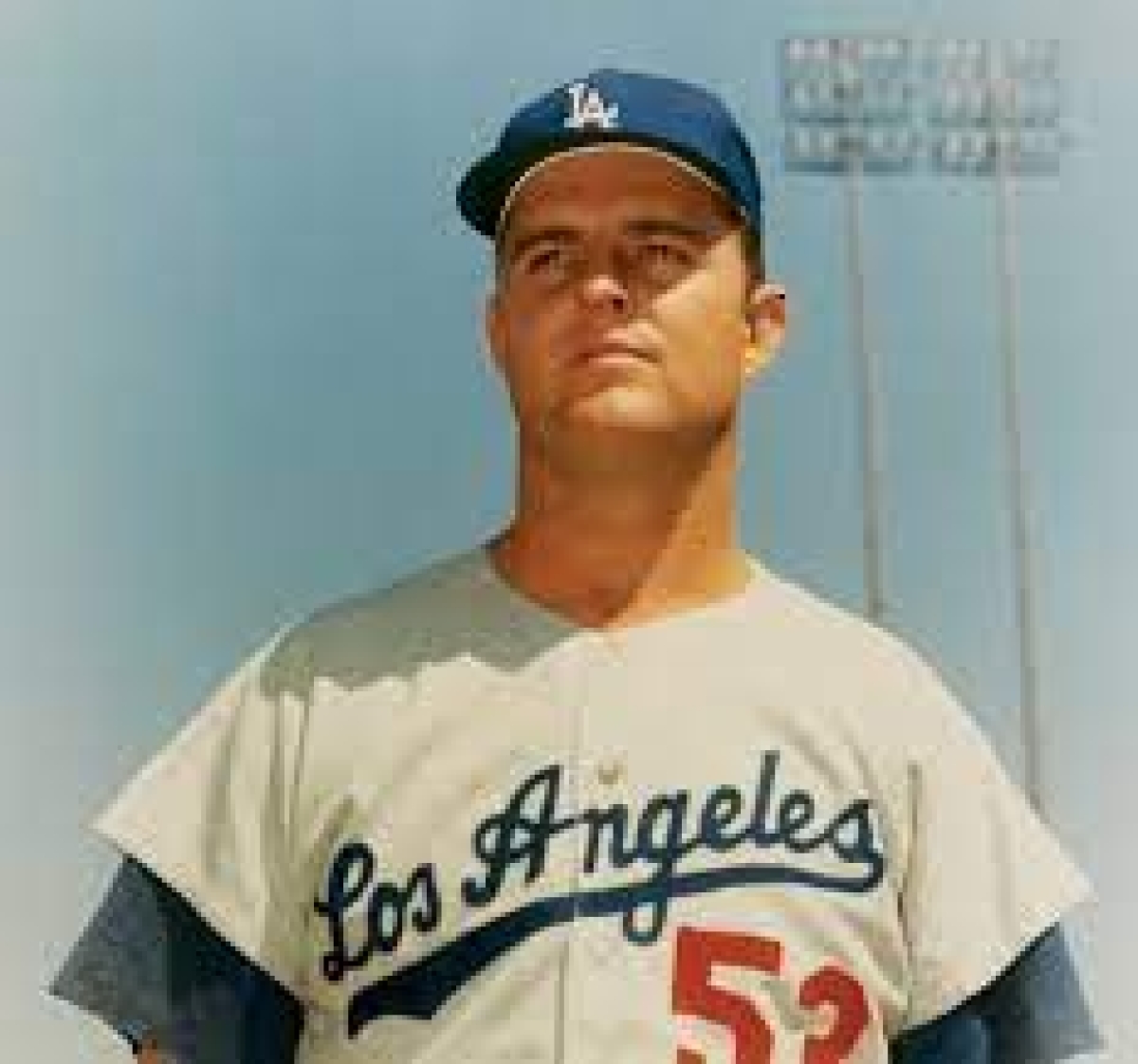
Don Drysdale arrived in Brooklyn in 1956 as a towering presence from Van Nuys, a local product who traded a promising basketball future for a seat on the Dodgers' flight to Los Angeles. While he spent much of the 1960s as a formidable counterpart to Sandy Koufax, he carved out a legacy defined by an aggressive, sidearm delivery and a refusal to yield even an inch of the inner half of the plate.
The initial chapter of his tenure saw him secure a rotation spot at just 20 years old, navigating the pressure of a championship-caliber clubhouse with veteran poise. He earned a World Series ring as a rookie in 1956 and solidified his status as a permanent fixture by the time the club moved to Southern California in 1958. By 1959, he had become a premier arm in the National League, earning his first All-Star selection and helping the Dodgers capture their first title in Los Angeles. This early success established a baseline of reliability that would allow the franchise to build a pitching-centric dynasty over the next decade.
Drysdale reached a peak of individual recognition during the 1962 campaign, a season where he emerged from the pack as the game's elite right-hander. That summer, he led the National League in wins (25), innings pitched (314.1), and strikeouts (232), a performance that earned him both the Cy Young Award and Major League Player of the Year honors. He followed this with a dominant 1963, anchoring the staff alongside Koufax to sweep the Yankees in the World Series. His ability to chew up massive amounts of innings, averaging over 300 frames a year during the early sixties, gave the Dodgers a steady floor of excellence that few rotations in history could match.
The middle of the decade featured a continued run of hardware and high-stakes success, including another World Series championship in 1965. Between 1961 and 1965, he was an annual fixture at the All-Star Game, providing a fierce competitiveness that perfectly complemented the quiet dominance of his southpaw teammate. While his strikeout totals were often overshadowed by the "Left Arm of God," his command and willingness to challenge hitters inside made him one of the most intimidating pitchers of his era. He remained a high-quality starter as the decade progressed, rarely missing a turn and consistently keeping his ERA below the league average.
Everything culminated in a historic swan song during the 1968 season, where he authored one of the most legendary streaks in baseball history. That summer, he set a then-Major League record by tossing 58.2 consecutive scoreless innings, a stretch that included six straight shutouts. It was a masterpiece of control and mental toughness that reminded the league he was still a top-tier threat even as he entered his thirties. Though he walked away from the game just a year later due to shoulder issues, that scoreless streak remains the definitive punctuation mark on a career built on stubborn excellence.
He retired with 209 wins, a 2.95 ERA, and 2,486 strikeouts, figures that represent a lifelong commitment to the same organization. He remained a professional icon long after his final pitch, eventually being inducted into the Baseball Hall of Fame in 1984, the same year the Dodgers raised his number 53 to the rafters.
Comments powered by CComment