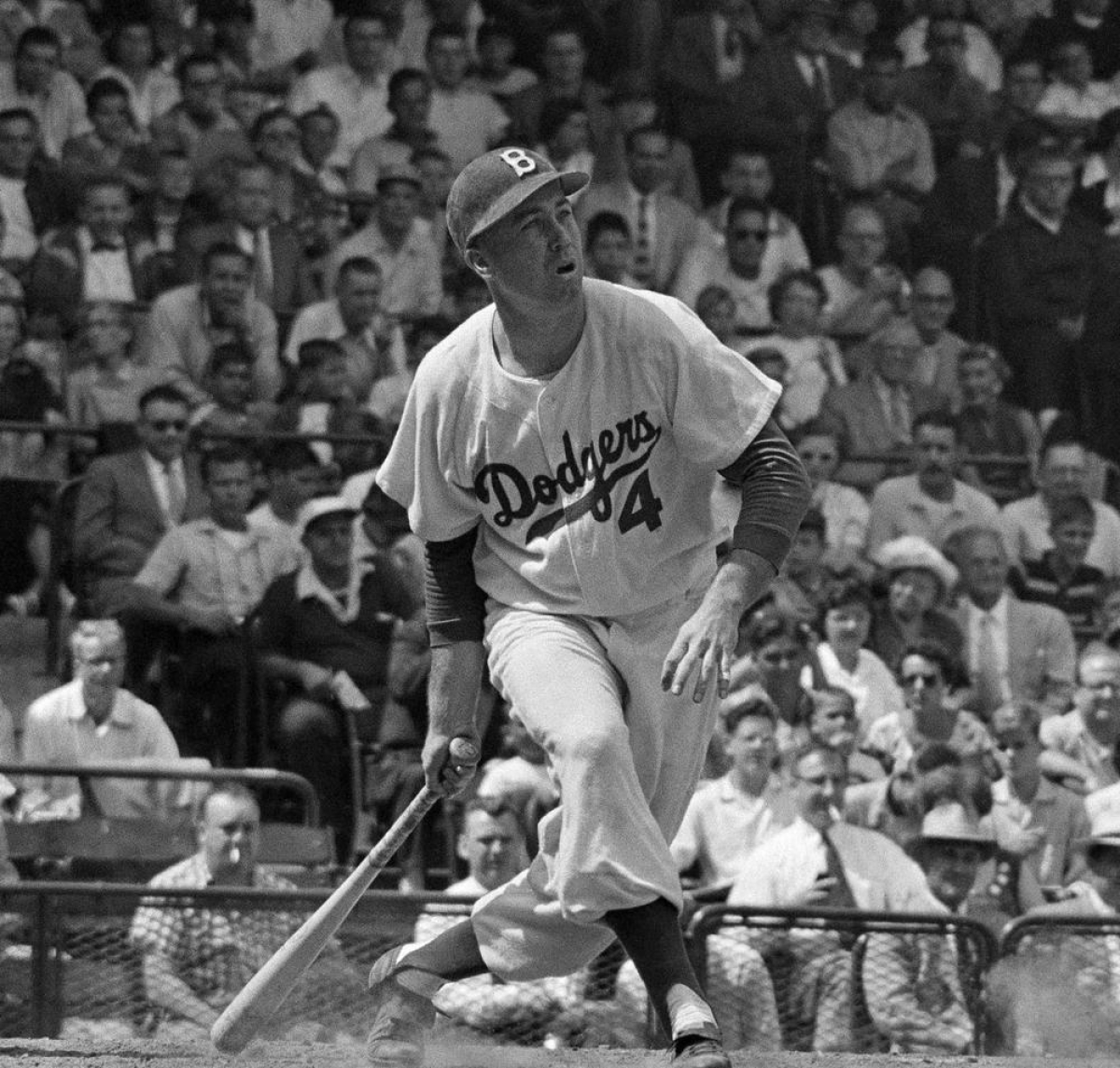
A raw, high-upside talent from Compton, Duke Snider was a local California kid who would eventually become the definitive power source for the legendary "Boys of Summer." While he navigated the immense pressure of batting third in a lineup filled with future Hall of Famers, he quickly established that his left-handed stroke was the primary engine of the franchise’s offensive output.
The initial chapter of his tenure was defined by a steady ascent alongside fellow pioneer Jackie Robinson, securing a permanent spot in the starting outfield by 1949. Though he faced early criticism for his strikeout totals and a late-season slump during the 1951 pennant race, Snider maintained a professional focus that transformed him into one of the most feared hitters of the decade. By 1953, he had harnessed his power to an elite degree, beginning a historic run of four consecutive seasons with at least 40 home runs. This steady production made him the only player in the 1950s to reach that plateau in four straight years, providing a high-quality baseline of power that few in the sport could rival.
Snider reached a remarkable ceiling of individual production between 1953 and 1956, a stretch that solidified his place in the "Willie, Mickey, and the Duke" debate of New York center fielders. During this peak, he captured the 1955 RBI title with 136 runs driven in, leading the Dodgers to their first and only World Series championship in Brooklyn. He followed that by winning the 1956 home run crown with 43 blasts while also leading the National League in walks and on-base percentage. His impact was reflected in his perennial All-Star selections and five separate top-ten finishes in the MVP voting, proving he was the central gear in the most potent offense of the era.
His tenure was further defined by a mastery of the spotlight during the Fall Classic, where he consistently raised his game. He set a specialized record by hitting four home runs in two different World Series (1952 and 1955), a feat of postseason power that anchored the middle of the order when the stakes were highest. Whether he was robbing hitters of extra bases with his athleticism in center field or driving the ball into the Bedford Avenue structures, he provided a versatility that allowed the Dodgers to dominate the National League. This reliability translated into 1,995 hits and a career .300 batting average during his time in the organization.
The later stages of his career featured a shift toward a leadership role as the franchise transitioned to Los Angeles in 1958. While the dimensions of the Los Angeles Memorial Coliseum and nagging injuries began to limit his offensive volume, his veteran presence remained a value to the clubhouse. He remained a high-quality contributor during the 1959 championship run, helping the club secure its first title on the West Coast as a respected elder statesman.
His Dodgers run ended when his contract was sold to the New York Mets in 1963. As a Dodger, he had 389 home runs and 1,271 RBIs and was finally inducted in 1980. He remained an icon of the franchise long after his retirement, seeing his number 4 raised to the rafters the same year he entered Cooperstown.
Comments powered by CComment