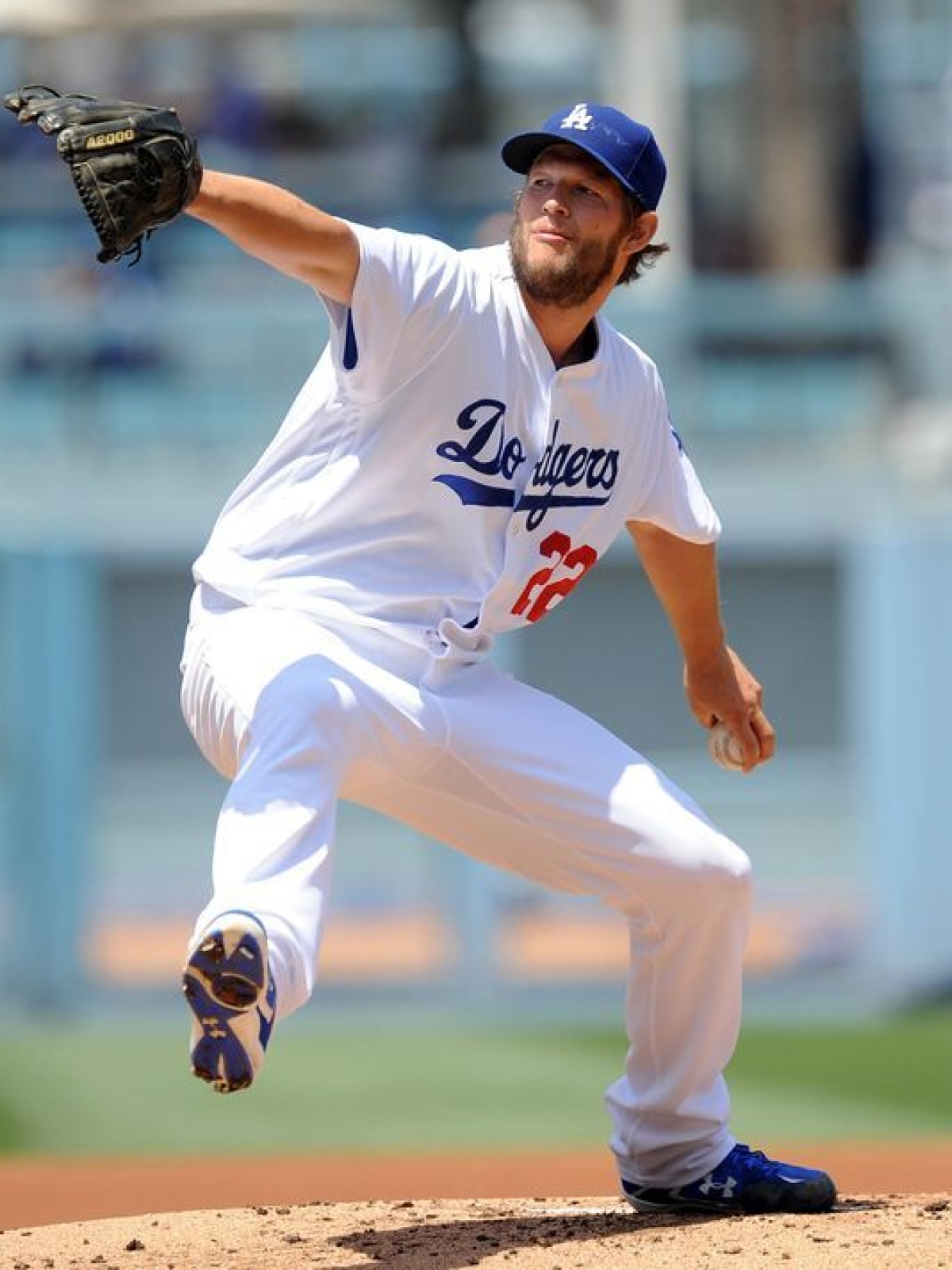
When making these lists, they are supposed to be fun and to use the proverbial number 99.9, which is the percentage they are. With the Los Angeles Dodgers, it was so hard, and there were so many people we could choose from within the top tier that choosing amongst icons was befuddling. Especially considering the man we decided at the top is not who you might think.
Clayton Kershaw arrived in Los Angeles as the seventh overall pick in the 2006 draft, a Texas high school phenom whose looping curveball and high-velocity heater immediately invited comparisons to the great Sandy Koufax. He reached the big leagues just two years later, a raw southpaw tasked with upholding a pitching lineage that defines the Dodgers’ identity. For nearly two decades in blue, he has provided a specialized brand of mound dominance, proving that a generational arm could withstand the immense pressure of the Hollywood spotlight to become a foundational icon of the franchise.
The early chapters of his tenure were defined by a methodical evolution from a high-upside prospect into a tactical workhorse. After a 2008 debut that saw him finish as the league’s youngest player, Kershaw showed the organization he was a professional mainstay by posting a stellar 2.79 ERA in 2009, his first full season in the rotation. He followed that by eclipsing the 200-inning and 200-strikeout marks for the first time in 2010, recording a specialized complete-game shutout against San Francisco that served as a harbinger of the dominance to come.
The 2011 campaign was the season that marked his breakout on the global stage. That summer, he demonstrated a technical mastery of the strike zone, winning the Pitching Triple Crown by leading the National League in wins (21), strikeouts (248), and ERA (2.28). He showed the organization he was a premier superstar by earning his first career Cy Young Award, a performance that signaled the beginning of a decade-long reign. This breakout was merely the opening act for a pitcher who would eventually make the All-Star Game a nearly annual tradition.
His tenure saw an unprecedented level of individual recognition between 2013 and 2014, a two-year stretch that established him as the gold standard in the sport. During this peak, he secured back-to-back Cy Young Awards, including a historic 2014 season where he also captured the National League MVP. He showed the organization he was a foundational outlier by posting a specialized 1.77 ERA and a 0.857 WHIP, marks that echoed the legendary numbers of the dead-ball era. His tactical value was defined by his ability to go deep into games while maintaining elite efficiency, famously tossing a no-hitter in 2014 that remains one of the greatest individual performances in Dodger Stadium history.
Between 2011 and 2017, he won five ERA titles, proving to be a foundational workhorse who consistently led the league in WHIP and strikeout-to-walk ratio. He demonstrated a specialized durability during this stretch, remaining a perennial Cy Young contender even as he navigated back and shoulder issues. His tactical mastery of the "Kershaw Curve" and a devastating slider ensured he remained a high-quality threat every time he took the ball, anchoring a rotation that reached the postseason in every season from 2013 onward.
The only thing Kershaw had left to do was win the World Series, which he did in 2020. While critics had often highlighted his postseason struggles, Kershaw demonstrated a foundational resilience during the Dodgers' title run. He showed the organization he was a high-caliber winner by securing two victories in the World Series against the Tampa Bay Rays, posting a 2.31 ERA over his two starts. This historic performance allowed him to finally lift the trophy, securing the ring that many felt was the final missing piece of a first-ballot Hall of Fame resume.
As the decade turned, the trajectory of his career shifted toward a veteran leadership role, though his efficiency remained remarkably high. He earned his 200th career win in 2023 and surpassed the milestone of 3,000 strikeouts in 2025. Despite dealing with a set of injuries that limited his availability during the team’s 2024 championship run, his presence in the dugout remained a tactical asset for a club that eventually secured its second title of the decade. He proved that true greatness is found in the ability to adapt, evolving from a power pitcher into a technical master as he entered his late thirties.
Kershaw had his farewell tour in 2025, which again resulted in a third World Series. He retired with three Cy Young Awards, an MVP, and three World Series rings, 223 wins, 3,052 strikeouts, and his status as the greatest Dodger of all time is a technical certainty. He proved that true greatness is found in the legacy of a player who carries himself with the same poise and humility regardless of the hardware in his trophy case, a journey that now heads directly to a first-ballot induction in Cooperstown.
Comments powered by CComment