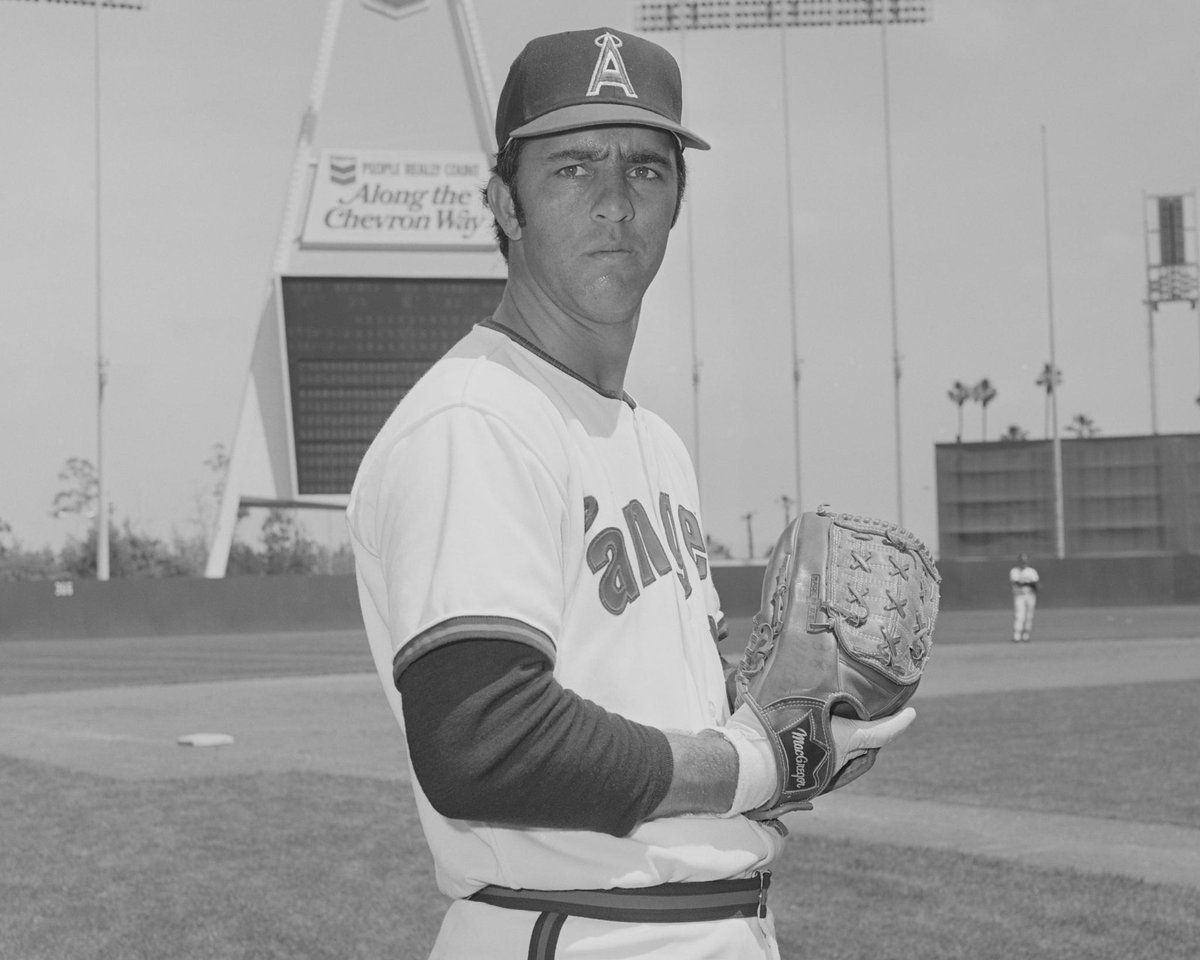
Debuting with the Angels in 1966, Clyde Wright arrived as a wiry southpaw with a specialized repertoire that took a few years to fully calibrate. While he spent his first four seasons bouncing between the rotation and the bullpen, even suffering through a miserable one-win campaign in 1969, he transformed into a technical marvel practically overnight.
Wright demonstrated flashes of high-quality potential during his 1966 debut, but he quickly became a professional mainstay in the "swingman" category, oscillating between spot starts and high-leverage relief. It wasn't until he perfected a screwball during winter ball, reportedly at the suggestion of teammate Jim Fregosi, that he truly found the high-caliber arsenal needed to anchor a major league rotation.
In 1970, Wright won 22 games, setting a franchise record for a left-hander that still stands today. He was a high-stakes performer on July 3, 1970, when he famously tossed a no-hitter against the Oakland A’s, an achievement that occurred just hours after he was inducted into the NAIA Hall of Fame. His efficiency that year earned him his only All-Star selection and a sixth-place finish in the Cy Young voting.
Between 1971 and 1972, he was a valuable technical player, posting two consecutive seasons with an ERA below 3.00 and pitching over 250 innings each year. He demonstrated a particular skill in keeping hitters off balance, earning 16 wins in '71 and increasing to 18 wins in ’72.
In 1973, physical wear began to impact his high-frequency output. Battles with chronic back pain made it difficult for him to even bend over on the mound, a specialized struggle that led to a league-leading 19 losses. Following the season, Wright was dealt to the Milwaukee Brewers.
With the Angels, Wright had an 87-85 record with a 3.28 ERA.
Comments powered by CComment