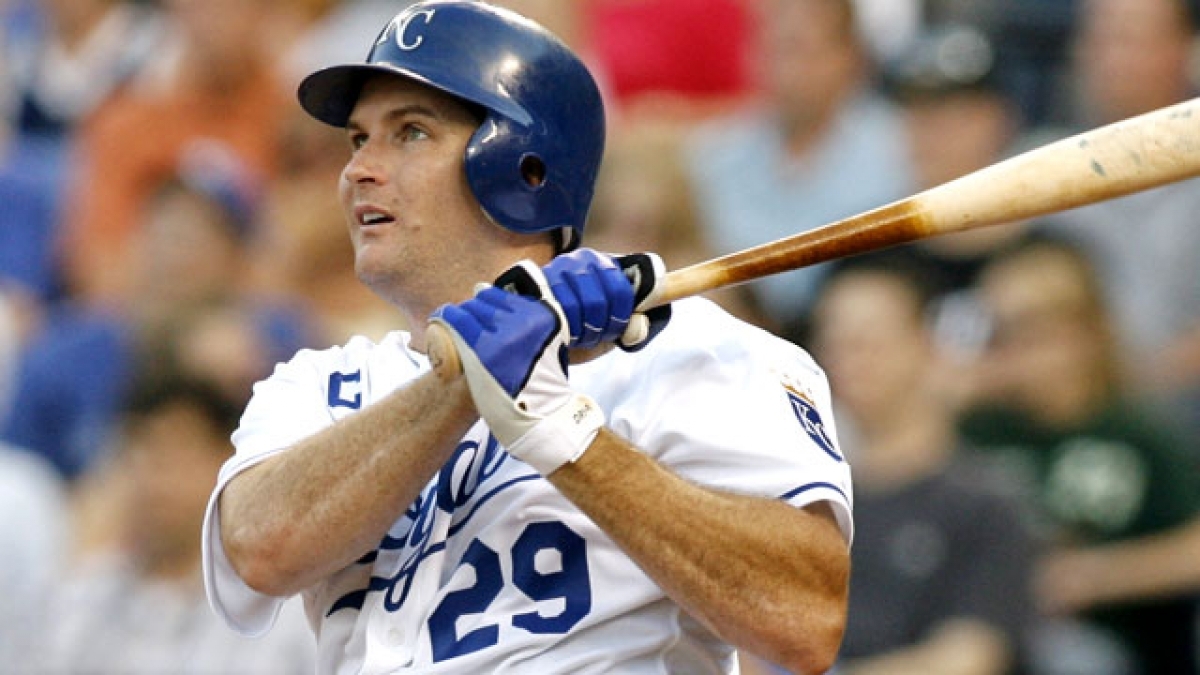
Mike Sweeney arrived in Kansas City as a 10th-round pick with a catcher's mitt and a bat that would eventually make him the heart and soul of the franchise. While he began his journey behind the plate, his path to becoming a Royals legend was paved by a transition to first base and designated hitter, where his offensive production could carry a team through a difficult era. For thirteen seasons in a Royals uniform, he was a beacon of character and consistency, a player who famously wore the captain's "C" on his jersey and served as the bridge between the glory years of the eighties and the resurgence of the 2010s.
Sweeney’s emergence in Kansas City reached a definitive breakout in 1999. After several seasons of splitting time and battling for a permanent spot, he secured the starting job and responded with a .322 batting average and 22 home runs. This performance signaled a transition from a defensive liability at catcher to one of the premier offensive threats in the American League. In 2000. That year, Sweeney set a franchise record with 144 RBIs, a mark of high-frequency production that earned him his first of four consecutive All-Star selections and solidified his status as the most dangerous bat in the lineup.
In 2002, he reached a career peak for average, batting .340, the second-highest single-season mark in Royals history, and finished second in the American League batting race. He showed the organization that he was a foundational piece of the franchise, recording five seasons with a batting average of .300 or better and six seasons with at least 20 home runs. However, his overall value declined due to defensive struggles and a series of back and knee injuries that increasingly limited him to the designated hitter role. Despite these physical hurdles, he remained a model of resilience, providing the dependable leadership the team’s first official captain was required to provide.
Everything culminated in a career that saw him rank near the top of almost every major offensive category in Royals history. He finished his tenure in Kansas City with 1,398 hits, 197 home runs, and a .299 batting average, a statistical footprint that trails only George Brett in the conversation of the team's greatest hitters. However, the toll of chronic injuries eventually led to a departure following the 2007 season. He spent his final professional years as a veteran presence in Oakland, Seattle, and Philadelphia, but he chose to retire as a Royal, signing a one-day contract in 2011 to ensure his journey ended where it began.
The story in Kansas City reached a natural conclusion in 2015 when he was inducted into the Royals Hall of Fame.
Comments powered by CComment