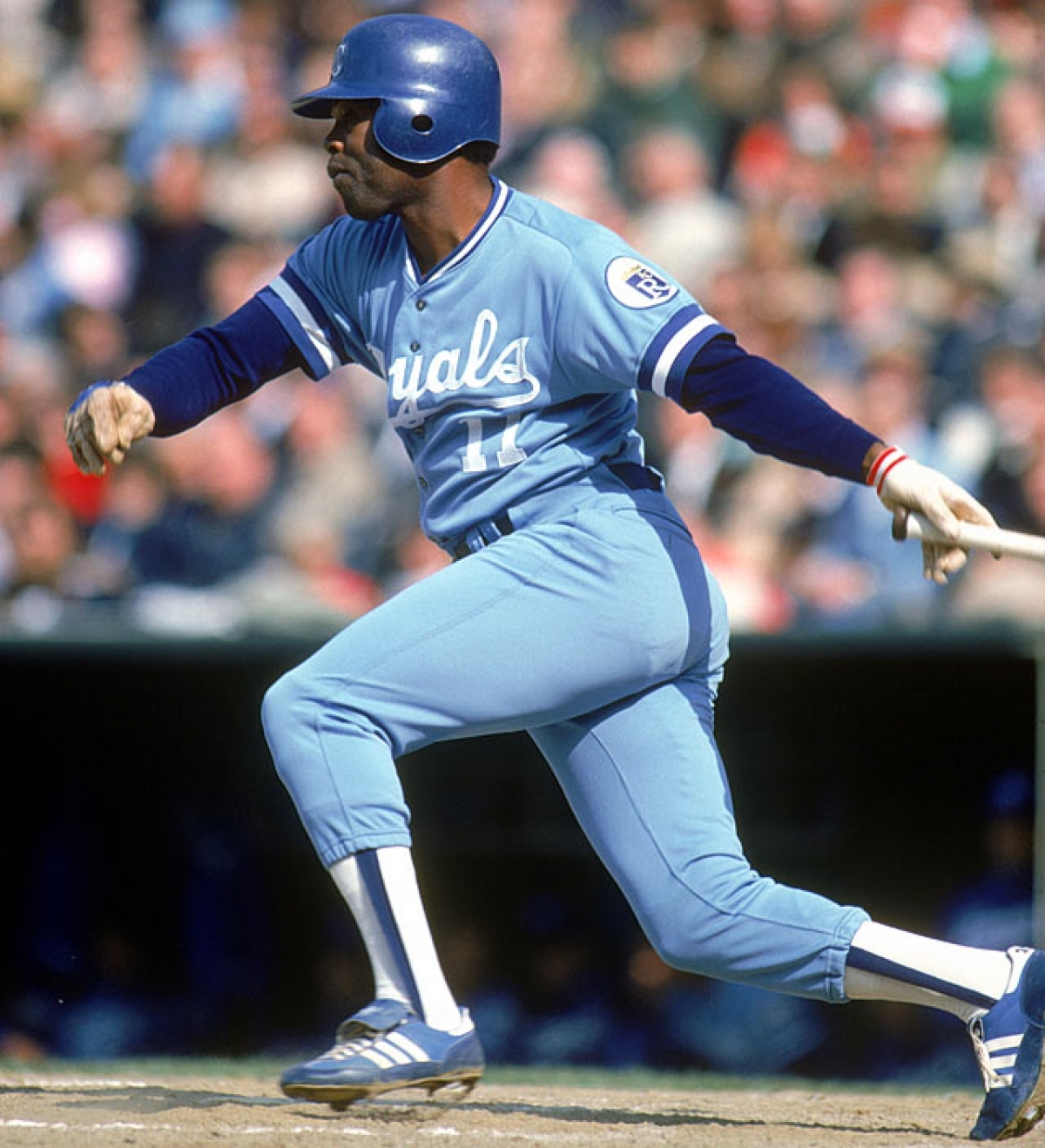
Hal McRae was the definitive prototype for the modern designated hitter, a man who transformed a newly created rule into a specialized art form. When he arrived in Kansas City in 1973 via a trade with the Reds, the Royals weren't just acquiring a bat; they were securing the competitive heartbeat of their franchise for the next fifteen seasons. McRae didn't let his defensive limitations define him; instead, he focused his intensity entirely on the batter's box, proving that a player could become a franchise pillar by mastering the psychological and tactical demands of the DH role.
McRae’s ascent in Kansas City began with an immediate high-frequency impact, hitting over .300 in his first two full seasons with the club. He reached an unrivaled gear in 1976, a season that served as a career-defining peak for his efficiency at the plate. That summer, he battled teammate George Brett for the batting title until the final day, finishing with a .332 average and leading the American League in both on-base percentage (.407) and OPS (.868). He finished fourth in the MVP voting, signaling a transition from a productive hitter to one of the most feared outliers in the game. He wasn't just a "solid contributor"; he was a model of focused aggression, specializing in the "hard slide" and the RBI knock.
The middle of his tenure was marked by a relentless, steady-state excellence as the Royals emerged as a perennial powerhouse. Between 1974 and 1982, McRae exceeded the .300 mark six times, earning three All-Star nods and becoming the first player to win the Designated Hitter of the Year award three times. He reached a new level of run production in 1982, at age 36. That season, he led the American League with 133 RBIs and secured his first Silver Slugger Award, again finishing fourth in the MVP race. He showed the organization that a veteran-like poise and a violent, line-drive swing could defy the standard aging curve, providing the middle-order muscle that fueled multiple postseason runs.
Everything culminated in the 1985 championship season, where McRae served as the elder statesman of the clubhouse. While his playing time had reached a natural plateau, his presence was a deterrent that helped steady a young Royals squad during their comeback in the "I-70 Series." He finished his Kansas City story with 1,924 hits and 1,012 RBIs, leaving the diamond as the gold standard for every designated hitter who followed.
In 1989, the Royals inducted him into their Hall of Fame.
Comments powered by CComment