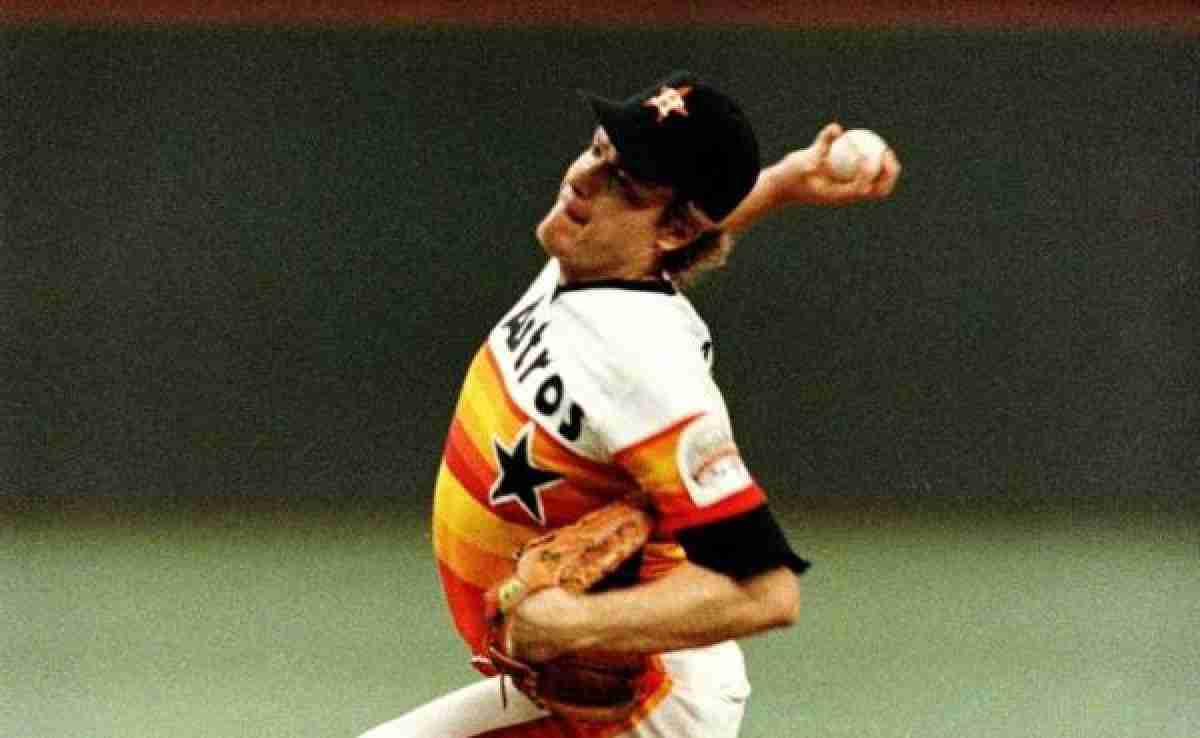
In the mid-1980s, the Houston Astros possessed a psychological weapon that reduced the best hitters in the National League to a state of visible frustration. Mike Scott, armed with a split-finger fastball that seemed to defy the laws of physics, transformed from a struggling former prospect into a high-velocity force of nature. For a five-year stretch in the heart of the "Astrodome era," he wasn't just the ace of the staff; he was a tactical anomaly who could end a game—or a division race—entirely on his own terms.
Scott’s tenure in Houston was defined by a historic metamorphosis during his legendary 1986 campaign. That summer, he authored a statistical outlier season of such profound dominance that he swept nearly every major pitching category, leading the National League in ERA (2.22), strikeouts (306), and WHIP (0.923). The hallmark of his mastery occurred on September 25, 1986, when he became the only pitcher in major league history to throw a no-hitter in a division-clinching game. He didn't just secure the NL West title; he suffocated the Giants in a 2-0 masterpiece that served as the final exclamation point on his Cy Young Award-winning season.
However, months later, he had an even bigger moment. During the 1986 NLCS against the Mets, Scott’s efficiency bordered on the supernatural, pitching two complete-game victories and allowing only a single run across 18 innings. He struck out 19 batters and walked just one, leaving the eventual world champions so demoralized that he was named the NLCS MVP, becoming the first player in history to win the honor while playing for the losing team. Had the series reached a Game 7, Scott’s presence on the mound was widely considered a foregone conclusion for a Houston victory, a testament to the high-leverage fear he instilled in his opponents.
While 1986 was his masterpiece, Scott remained a model of professional resilience as the decade closed. He surpassed the 200-strikeout plateau again in 1987 and reached a new personal high, where, in 1989, he led the league with 20 wins and finished as the Cy Young runner-up.
Scott declined rapidly after retiring two years later, but a year later, the team retired his number 33. Scott compiled 110 wins and 1,318 strikeouts, and the Astros inducted him into the inaugural class of the Astros Hall of Fame in 2019.
Comments powered by CComment