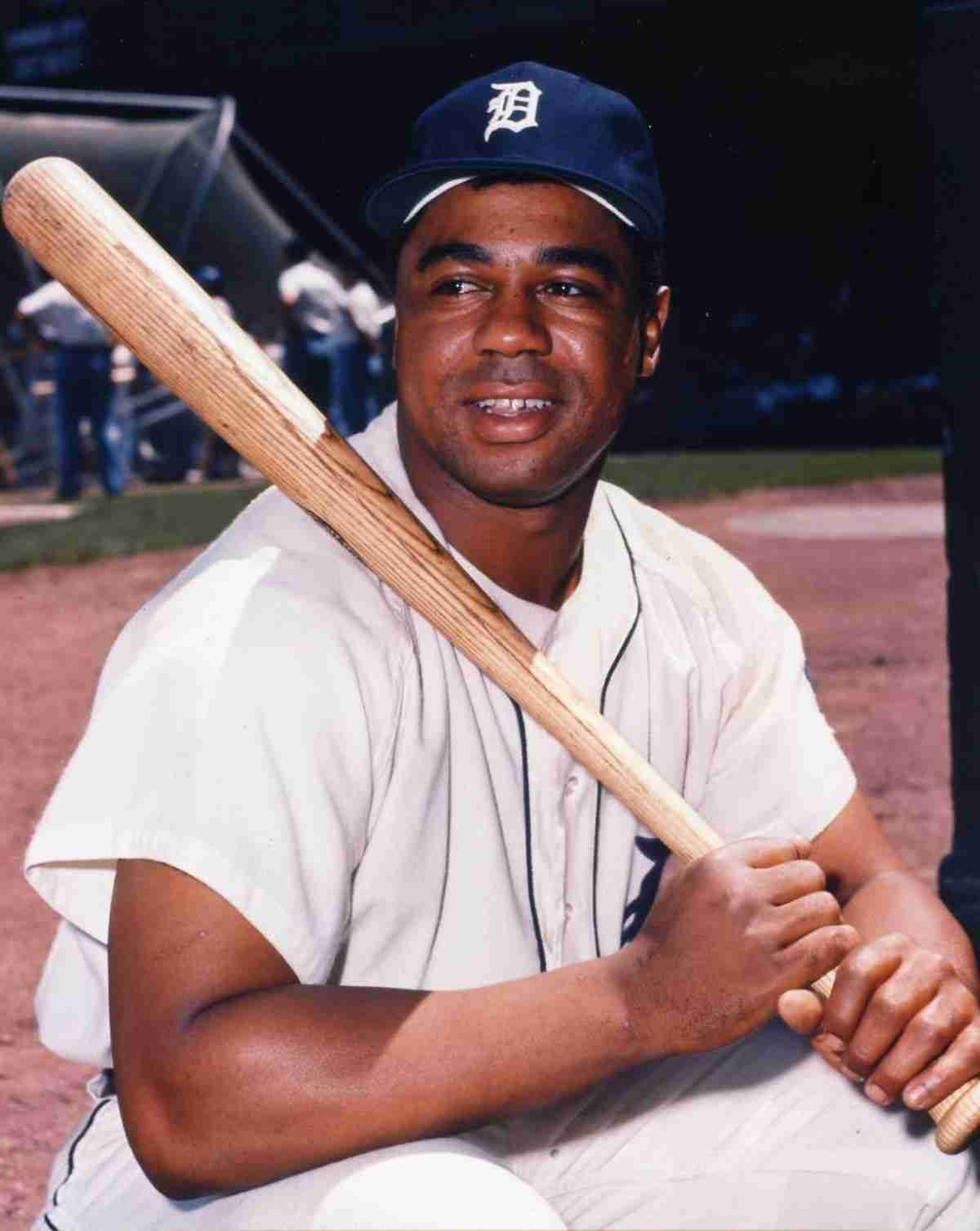
Willie Horton arrived in Detroit as a local hero, a graduate of Northwestern High School who signed with his hometown team at age 18. For parts of fifteen seasons, he served as the powerful left-field engine of the Tigers, a man whose strength was legendary and whose connection to the city went far beyond the box score. While he was a perennial threat in the heart of the order, it was his presence as a community pillar that cemented his status as one of the most significant figures in the history of the franchise.
Horton’s rise in Detroit reached a definitive peak during his first full season in 1965. After a few brief appearances in the early sixties, he seized the starting left-field job and responded with 29 home runs and 104 RBIs. This performance earned him the first of four All-Star selections and an eighth-place finish in the MVP race, signaling his transition from a local prospect to a premier power threat in the American League. He possessed a focused intensity at the plate, specialized in driving the ball into the Tiger Stadium seats with a frequency that few in the league could match.
The heart of his time in Detroit was defined by his role in the historic 1968 championship season. In a year where pitchers dominated the league, Horton was a statistical outlier, batting .285 and finishing second in the American League with 36 home runs. He finished fourth in the MVP voting that year, but his most iconic contribution occurred in Game 5 of the World Series. His perfect throw from left field to nab Lou Brock at the plate preserved a crucial lead and shifted the momentum of the series. He showed the organization that he was more than just a slugger; he was a championship-caliber competitor who delivered when the stakes were at their highest.
Everything culminated in a career total of 262 home runs for the Tigers, a mark of consistency that saw him reach the 20-homer milestone six times in a Detroit uniform. However, as the team transitioned into a rebuilding phase in the late seventies, the front office looked toward the future. In April 1977, the Tigers traded their long-time star to the Texas Rangers, an exit that marked the end of an era for the Detroit faithful. He spent the final years of his journey moving through several American League clubs, but his identity remained firmly rooted in Michigan.
The story in Detroit reached a final chapter in 2000, when the Tigers bestowed upon him their highest individual honor. Despite not having a plaque in Cooperstown, Horton saw his number 23 retired and a statue erected at Comerica Park, joining a select group of franchise legends.
Comments powered by CComment