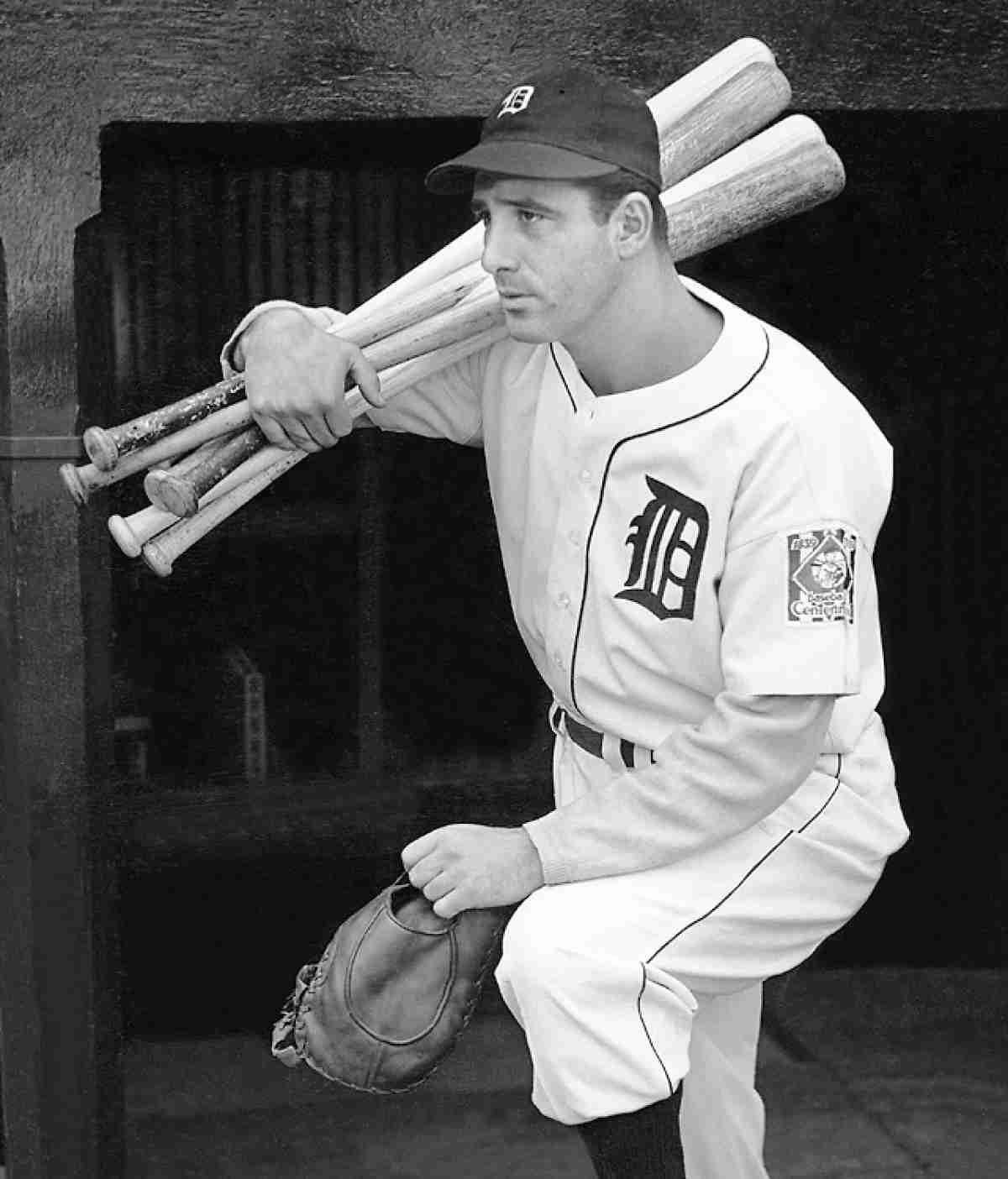
The story of Hank Greenberg is an intriguing "what-if" narrative in the history of the game. For twelve years, he was the heartbeat of the Detroit Tigers, a man whose presence in the lineup guaranteed a level of offensive production that bordered on the surreal. Yet, his legacy is defined as much by his absence as his presence; as the first major star to enlist in the military during World War II, he surrendered 47 months of his absolute athletic prime to the service of his country. Had he not spent those four years in the Army Air Forces, the record books would likely be a much different place today.
Greenberg’s tenure in Detroit was a masterclass in hitting for both power and average. He broke into the everyday lineup in 1933 and immediately set a standard of excellence that never wavered. He reached an early high-water mark in 1935, capturing his first American League MVP after leading the circuit with 36 home runs and a staggering 170 RBIs. His offensive output was a primary driver for the Tigers' first-ever World Series championship that autumn. He was a model of disciplined strength, possessing a unique ability to drive the ball to all fields, culminating in his historic 1938 run, in which he finished with 58 home runs, falling just two shy of Babe Ruth’s then-record.
The middle chapters of his career were defined by a historic transition and a profound commitment to duty. In 1940, at the height of his powers, Greenberg agreed to move from first base to left field to accommodate teammate Rudy York, a selfless adjustment that resulted in his second MVP award. He became the first player in major league history to win the honor at two different positions, hitting .340 and leading the Tigers to another pennant. However, after only 19 games in 1941, he traded his Detroit uniform for a military one. He spent the next four years serving as a captain in the China-Burma-India theater, returning to the club midway through 1945 just in time to hit a pennant-clinching grand slam and lead the Tigers to their second World Series title of his era.
In early 1947, his contract was sold to the Pittsburgh Pirates. With the Tigers, Greenberg compiled 306 home runs and 1,202 RBIs while capturing two MVP awards and two World Series titles.
The organization and the baseball world provided the final punctuation on his legacy when he was inducted into the Baseball Hall of Fame in 1956. In 1983, the Tigers ensured his name would forever be part of the franchise's skyline by retiring his number 5.
Comments powered by CComment