
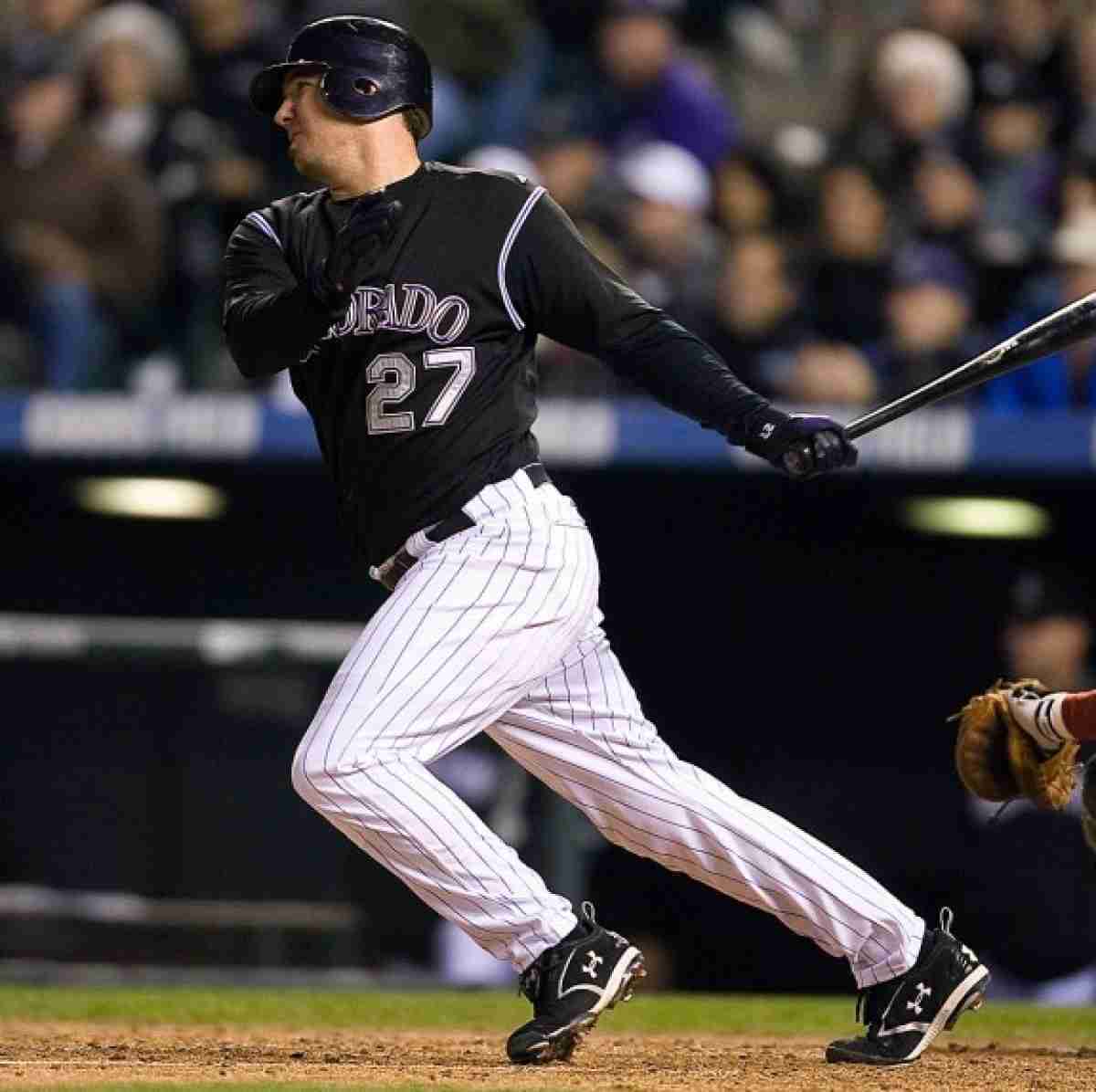


Arriving in 2003, Garret Atkins eventually claimed the third base job and became a central figure in the Rockies' most successful era. While he offered the kind of high-volume production that looks great on a 1990s baseball card, he was also a defensive liability whose overall value was often diluted by the very environment that padded his offensive totals.
Atkins reached his professional high-water mark during a 2006 campaign that, on the surface, looked like the birth of a superstar. He finished 15th in the NL MVP voting after hitting a blistering .329 with 29 home runs and 120 RBIs, numbers that placed him in a specialized group with the likes of Albert Pujols and Miguel Cabrera that year. This wasn't an isolated burst; he backed it up with a 25-homer, 111-RBI performance in 2007, serving as a vital run-producer for the "Rocktober" squad that reached the World Series. He twice batted over .300 and amassed three consecutive seasons with 20 or more home runs.
However, the focused intensity of his offensive production was almost entirely offset by his struggles in the field. Atkins was essentially a natural first baseman playing third out of necessity, and the metrics reflected that discomfort. He compiled a career -4.9 dWAR with the Rockies, often struggling with range and lateral quickness at the "hot corner." This defensive anchor, combined with a significant drop in production away from Denver, meant that despite his 100-RBI seasons, he never achieved the elite sabermetric status of his teammates. He plateaued early, and as his hitting began to decline in 2009, his lack of defensive versatility made him a difficult fit for the roster’s long-term plans.
His tenure with the organization ended following the 2009 season, after seven of his eight major league years in a Rockies uniform. Atkins compiled 805 hits and 98 home runs while finishing fourth in the 2005 NL Rookie of the Year race.

Comments powered by CComment