
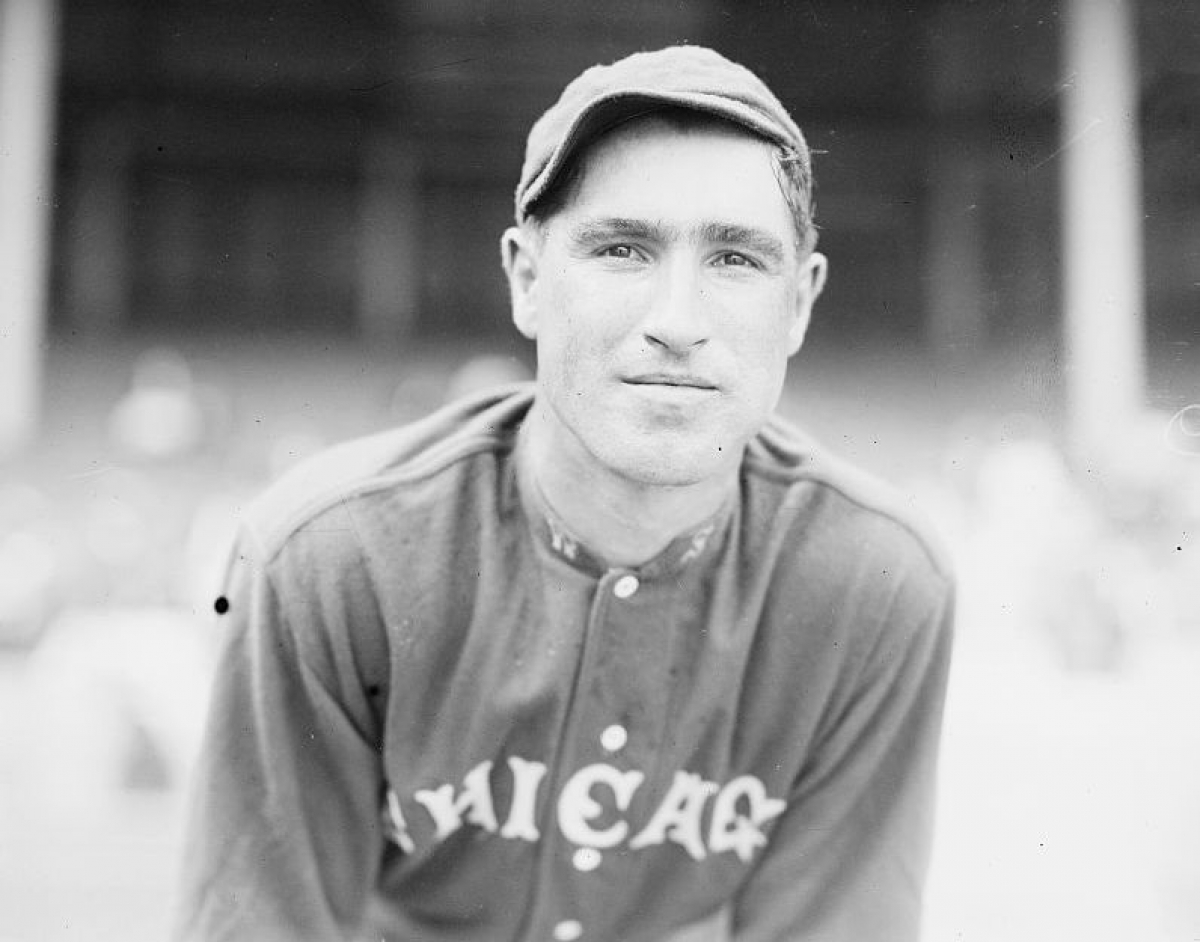


Arriving from the rugged landscape of Deadwood, South Dakota, Jim Scott debuted in 1909 and matured instantly into a reliable workhorse for the White Sox. He was the definition of a worker from the start, logging over 220 innings in each of his first three seasons. He arrived with a "clockspring" delivery that baffled hitters and quickly became the arm the organization leaned on to navigate the grind of the American League schedule. Though he suffered through a "hard luck" reputation, frequently victimized by a stagnant Chicago offense, his ability to consistently take the ball and keep his team in the game was the hallmark of his early years.
The absolute pinnacle of his career arrived in two distinct bursts of dominance. In 1913, after returning from an injury-shortened season, Scott authored a marathon campaign, pitching 312 innings and posting a sparkling 1.90 ERA. Despite his 20-21 record, MVP voters recognized his value, placing him 14th on the ballot for a season in which he allowed three or fewer earned runs in 39 consecutive starts—a Major League record at the time. He followed this in 1915 with his most decorated season, winning 24 games and leading the American League with seven shutouts, tying the great Walter Johnson for the league lead.
His identity was that of a quiet, intrepid professional who found unique ways to stay ahead of the game. Scott was a master of the breaking ball and was known to sportswriters as a wizard with the curve, using his legendary "mudball" to force hitters into weak contact. Whether he was stopping a 35-game hitting streak by Ty Cobb or throwing nine no-hit innings only to lose in the tenth, he played with a grit that earned him the respect of the entire league.
The chapter of his baseball life reached an abrupt and patriotic conclusion in 1917. While the White Sox were marching toward a World Series title, Scott left the team in mid-August to join the military after the United States entered World War I. He traded the mound for the uniform of his country, and while he technically shared in the 1917 championship, he spent the fall preparing for a different kind of service. He never returned to the Major Leagues as a player, but he left behind a career 2.30 ERA, a number that still ranks among the top twenty in the history of the sport.

Comments powered by CComment