
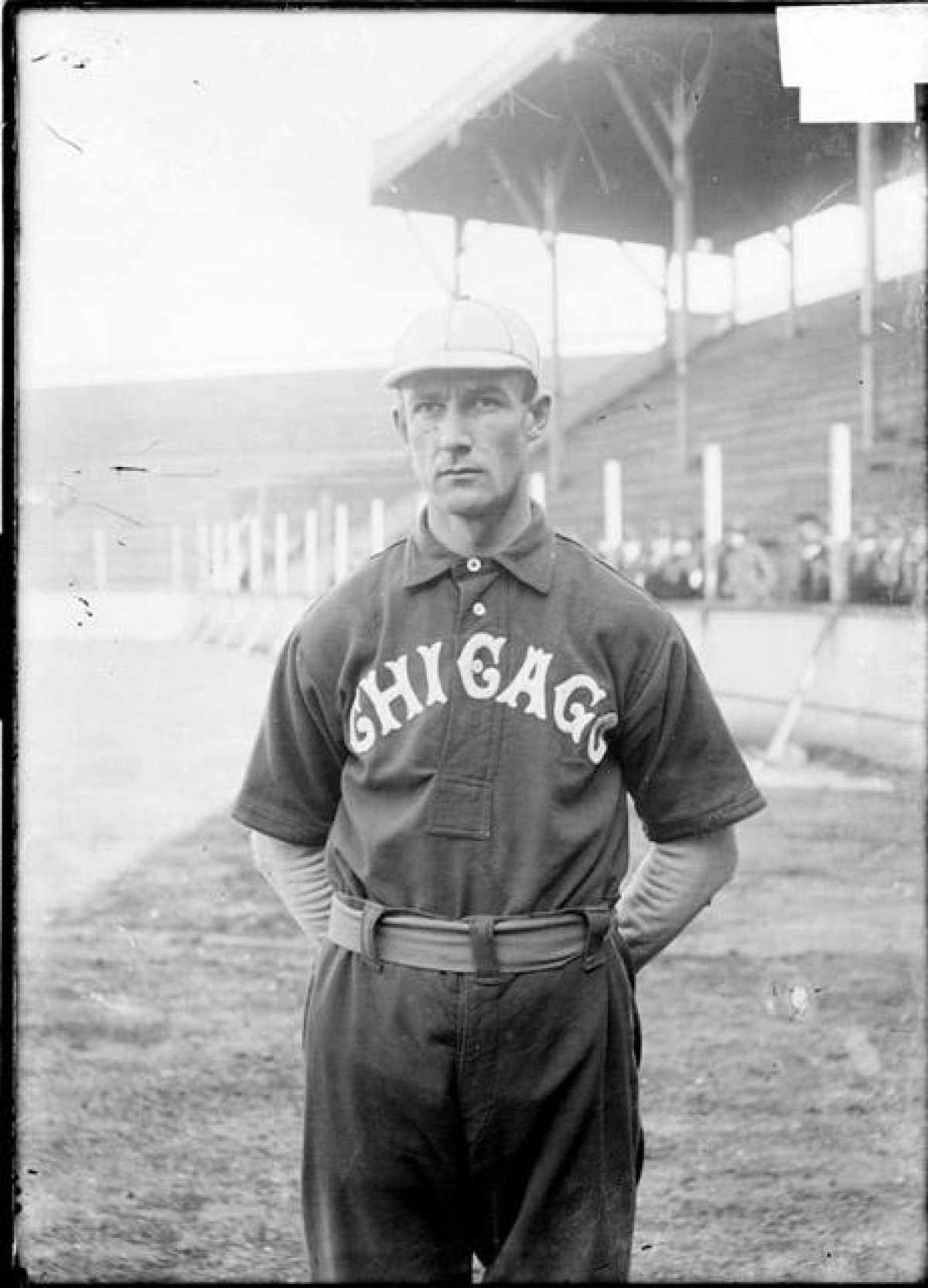
The landscape of Chicago baseball shifted in 1901 when Fielder Jones defected from Brooklyn to join the White Sox as a cornerstone of their inaugural American League roster. He arrived as a premier leadoff threat, maturing instantly into a force by batting over .300 in each of his first two seasons in the junior circuit. His combination of speed and on-base ability provided the spark for a team still searching for its identity, but his promotion to player-manager in 1904 truly transformed the franchise's trajectory.
Leadership and run prevention became his primary calling cards during the most successful stretch of his residency. While his individual batting average began to dip under the weight of his managerial duties, Jones remained a consistent producer, generating at least 110 hits in every season from 1904 to 1908. He understood that in the Deadball Era, the White Sox didn't need a juggernaut offense to win; they needed a team built on grit and defensive precision. Under his guidance, the 1906 squad earned the "Hitless Wonders" moniker, famously shocking the cross-town Cubs to capture the World Series title.
Reliability in the field was paired with an aggressive approach on the basepaths, as evidenced by his 206 stolen bases in a Chicago uniform. Jones was the rare manager who could lead by example, patrolling center field with a range that shortened the game for his pitching staff. His skills weren't found in a high slugging percentage, but in his ability to manufacture wins through tactical ingenuity and high-leverage decision-making. He concluded his Chicago stay with 1,151 hits, a total that reflects a decade of being the most influential figure on the South Side.
The conclusion of his time in Chicago was marked by a growing friction with owner Charles Comiskey. Exhausted by the internal politics of the front office, Jones abruptly walked away from the game following the 1908 season. Though he eventually resurfaced in the Federal League years later, his legacy was firmly rooted in the dirt of South Side Park.

Comments powered by CComment