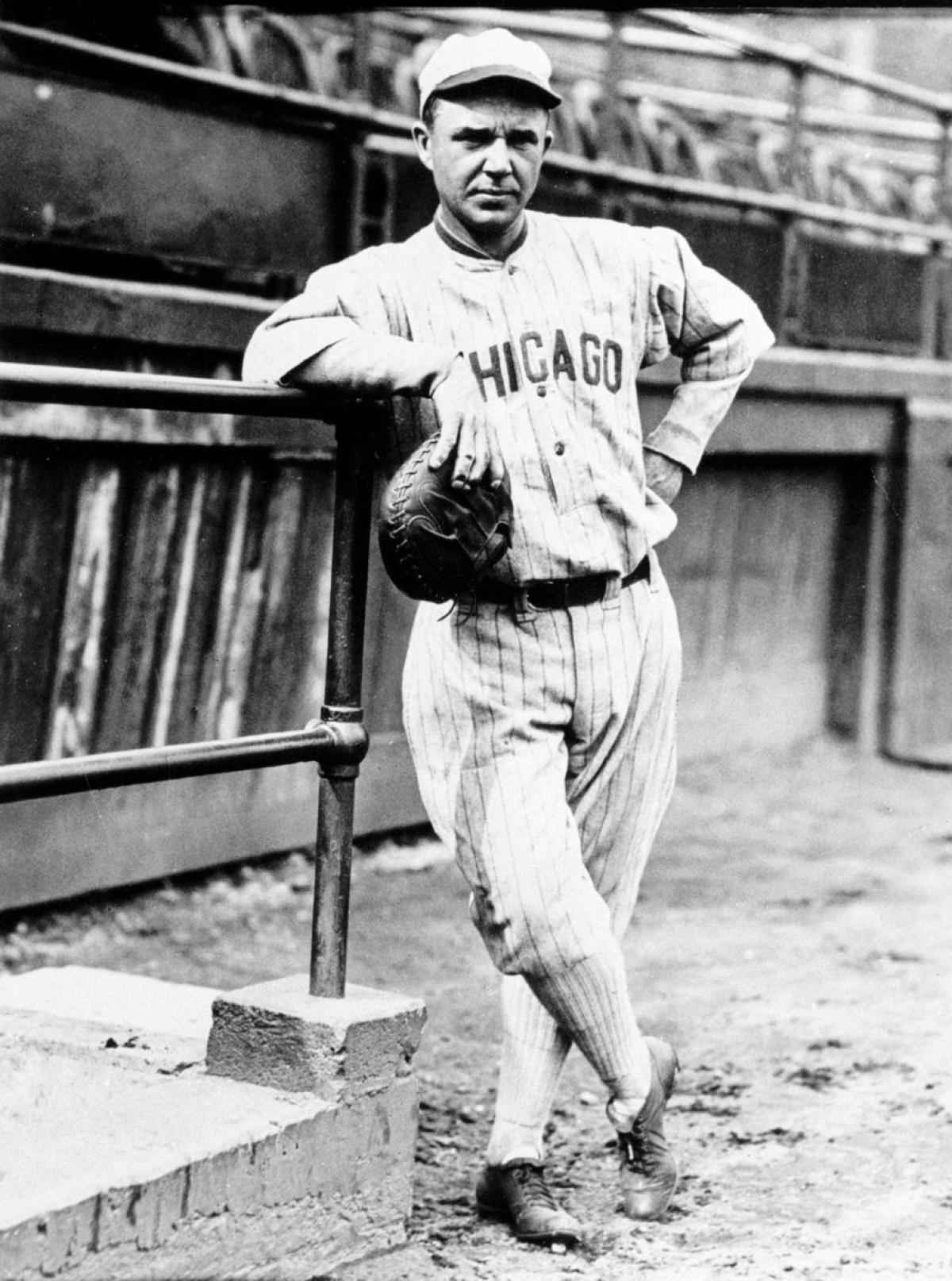
When Ray Schalk arrived in Chicago in 1912, the catcher's position was largely viewed as a stationary, grueling task of endurance. Schalk changed that narrative almost immediately. By 1913, he had secured the starting job, beginning a fifteen-season residency as the undisputed general of the White Sox infield. He didn't arrive with a thunderous bat, but he brought a level of defensive innovation that caught the league off guard. He was a pioneer of "active catching," famously becoming the first at his position to back up plays at first base and even third base, an athletic hustle that was revolutionary for the Deadball Era.
The peak of his career showcased skills that the box score alone struggles to capture. Schalk was a defensive titan who led the American League in Putouts nine times and Runners Caught Stealing on three occasions. His statistical outlier value reached its zenith in 1925 when he led the entire American League in defensive bWAR, not just among catchers, but across every position on the field. He was a five-time leader in fielding percentage, serving as the anchor for a pitching staff that relied on his cerebral game-calling and his lightning-quick release.
A defining chapter of his careerwas written during the darkest period in Chicago baseball history. During the 1919 "Black Sox" scandal, Schalk was one of the few players considered absolutely above reproach. His dedication to winning was so well-known that the conspirators didn't even dare approach him. He was the clean heart of a tainted era, a player who had already tasted championship glory in 1917 and refused to let the integrity of the game slip through his fingers. While his career average in Chicago sat at a quiet .254, his value was measured in the runs he prevented and the trust he inspired.
The final walk toward the exit for Schalk came after the 1928 season, following a tenure as a player-manager for the club. He left the South Side as a defensive legend, having caught more than 100 games in twelve different seasons, a staggering feat of durability for that era. His legacy was officially set in stone in 1955 when the Veterans Committee ushered him into Cooperstown, recognizing that his glove and his mind had influenced the game as much as any legendary slugger.
ittee.
Comments powered by CComment