
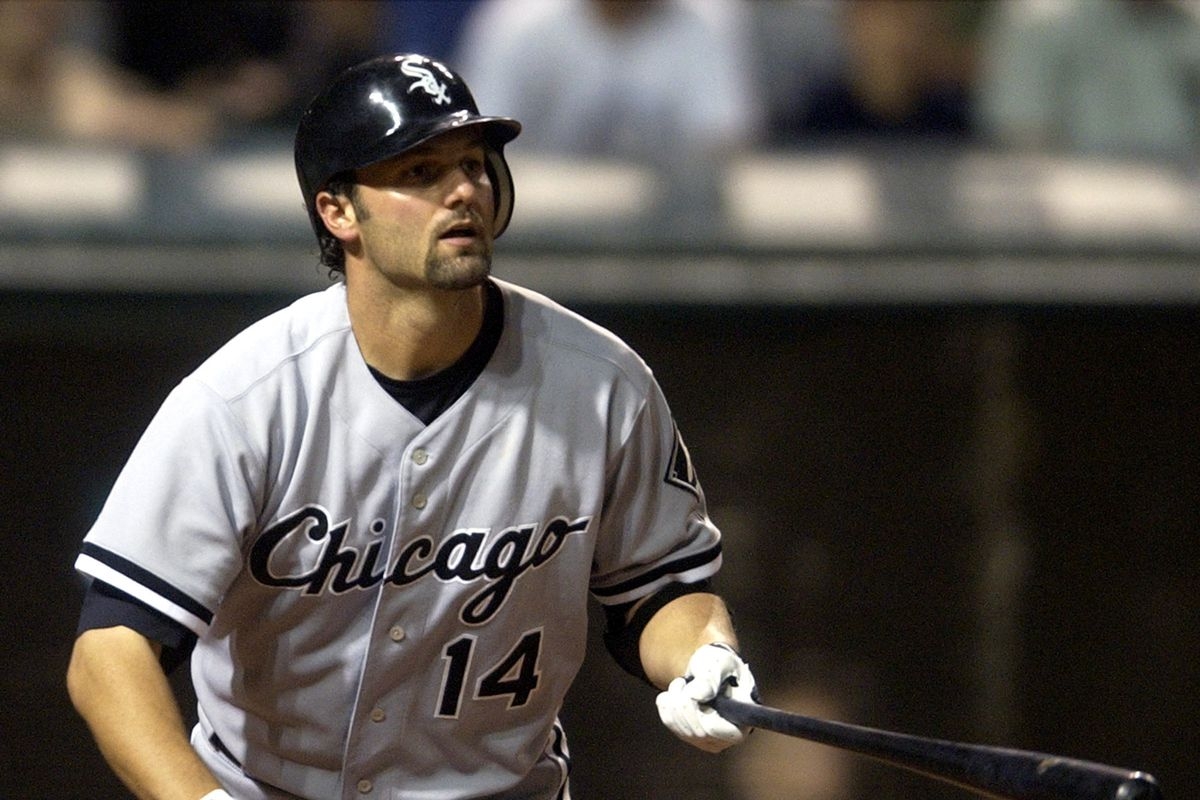



When Paul Konerko arrived in Chicago in 1999 via a trade with the Cincinnati Reds, he was a young hitter searching for a permanent home. The White Sox sent away a dynamic talent in Mike Cameron to get him, a move that initially raised eyebrows but quickly proved to be a stroke of genius. Konerko didn't waste time establishing his residency at first base, launching 24 home runs in his debut season and proving that his compact, powerful swing was perfectly suited for the South Side. He arrived as a promising trade piece and immediately began his transformation into the team’s identity that would define the organization for the next sixteen years.
The middle of his journey was highlighted by a level of power that peaked during the legendary 2004 and 2005 campaigns. Konerko rattled off back-to-back 40-home run seasons, earning his place among the elite power threats in the American League. The 2005 season, however, elevated him to the status of a permanent icon. Not only did he lead the team back to the postseason, but he also captured the ALCS MVP and provided the signature moment of the World Series with a thunderous grand slam in Game 2. He was the stoic leader of a squad that brought Chicago its first title since 1917, and carried the weight of a century-long wait on his shoulders.
However, calling a spade a spade requires acknowledging the limitations that came with his high-volume power. While he was a six-time All-Star, Konerko was often hindered by a lack of speed and a tendency to ground into double plays. His defensive range was limited, and he was never considered a threat on the basepaths. Yet, these negative attributes were largely overshadowed by his staggering moon shots from the plate. He amassed four more 30-home run seasons after the championship run and maintained a career slash line of .281/.356/.491 in a White Sox uniform. Fans were more than happy to overlook a few double plays in exchange for 432 home runs and 2,292 hits.
The final walk toward the exit came in 2014, concluding a nearly two-decade-long residency that had made him the emotional heartbeat of the franchise. He retired as one of the most beloved figures in Chicago sports history, a man whose number 14 was swiftly hoisted to the rafters. The organization further immortalized his impact by erecting a statue in his likeness outside the stadium, a permanent tribute to the man who hit the most important home runs in the history of the South Side.

Comments powered by CComment