
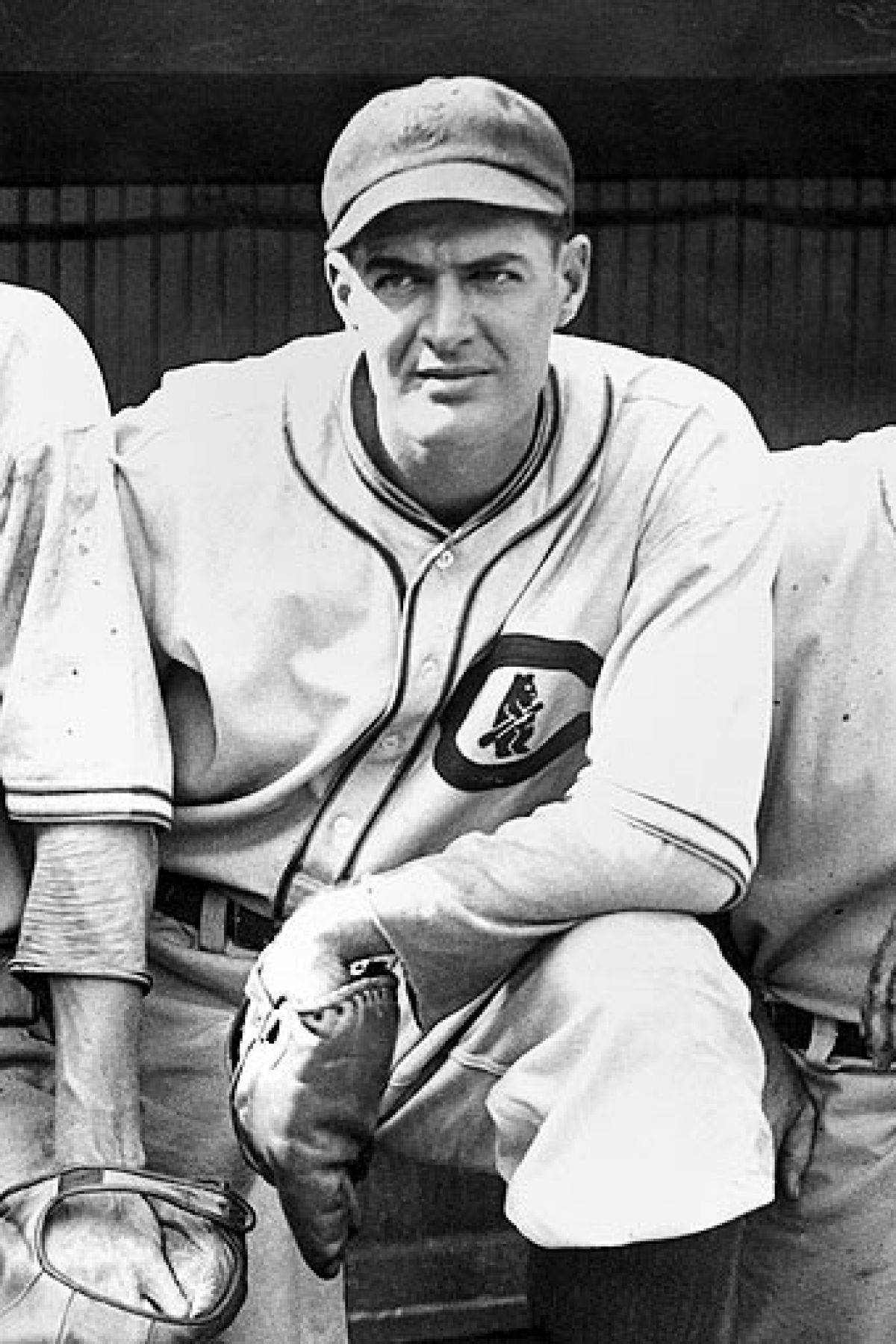


A trade with the Cardinals in 1933 brought the Louisiana right-hander to Chicago, and he wasted no time maturing into a cornerstone of the staff. Lee quickly shed any "prospect" labels by establishing a baseline that the North Side hadn't seen in years. From 1935 to 1939, he was a metronome of productivity, rattling off four separate seasons with at least 18 wins. He arrived as a young arm with a "jug-handle" curve and immediately became the stabilizing force for a roster that captured the 1935 pennant behind a historic 21-game winning streak.
The absolute pinnacle of his residency arrived in 1938, a season so profound that he was the consensus choice for the best pitcher in the game. That year, Lee led the National League in wins (22), ERA (2.66), shutouts (9), and ERA+ (144). and 8.0 bWAR—the highest for any pitcher in the league, and a second-place finish in the MVP voting. He was the primary architect of the "Homer in the Gloamin'" pennant race, at one point hurling four consecutive shutouts to tie a league record and drag the Cubs back into the thick of the race.
Consistency remained his trademark even as the decade turned. Lee was a two-time All-Star who was a quiet, durable workhorse. He was the rare pitcher who could bridge the gap between high-volume innings and elite run suppression, ultimately winning 139 games in a Cubs uniform, a total that still ranks among the top ten in the long history of the organization. Whether he was saving games in the 1935 World Series or leading the league in starts, he was the arm the organization leaned on when the stakes were highest.
The final chapters of his Chicago story were written during a brief return in 1947, following stints in Philadelphia and Boston. He left the city as a beloved figure of the pre-war era, a man whose 1938 campaign remains one of the most statistically perfect seasons in the annals of Wrigley Field.

Comments powered by CComment