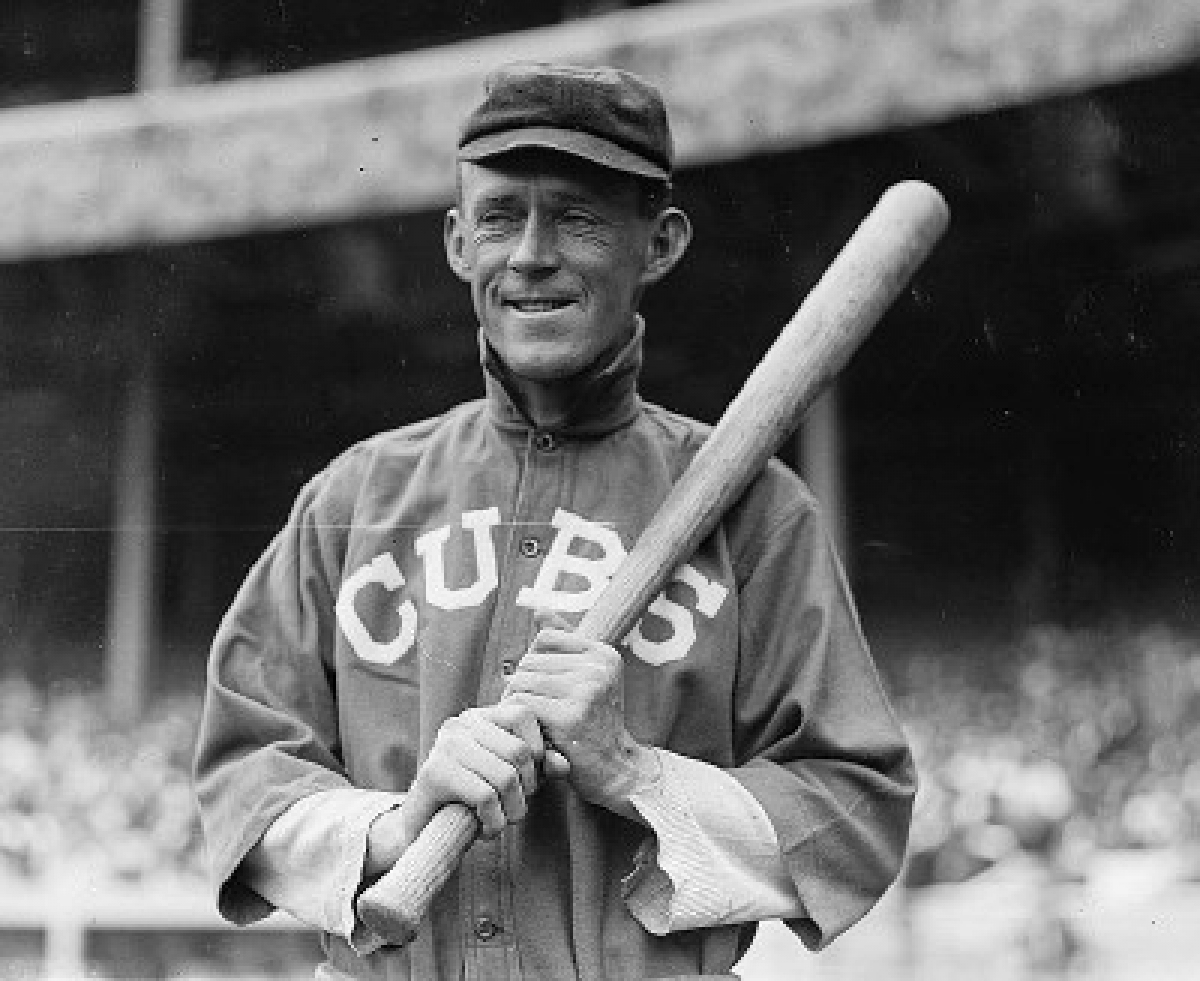
When Johnny Evers arrived in Chicago in 1902, he was a rail-thin teenager who reportedly weighed less than 100 pounds. Opposing fans initially thought he was a comedy act, but they quickly realized the "Trojan" was a fierce, surly competitor who treated every inch of the diamond like a battlefield. He locked down the starting second base job by 1903, forming a legendary, if personally frosty, partnership with Joe Tinker. While the two famously went years without speaking off the field, their synergy on the dirt anchored an infield that allowed the fewest runs in the league, proving that professional excellence doesn't always require personal friendship.
The peak of his Chicago residency was defined by the back-to-back World Series titles in 1907 and 1908. During those championship runs, Evers was a postseason titan, batting a blistering .350 in both Fall Classics. He wasn't a power hitter, but he possessed an elite batting eye that was decades ahead of its time. He led the National League in on-base percentage in 1912 with a staggering .431 mark and posted three seasons with an OBP over .400. He was the definitive figure for a small-ball age, a player who understood that a walk was just as lethal as a hit when it came to dismantling an opponent’s morale.
Evers had the reputation as the smartest man on the field. Evers was a master of the rulebook, most famously spotting that Fred Merkle had failed to touch second base in the heat of the 1908 pennant race, a heady play that eventually led the Cubs back to the World Series. However, his high-strung nature often led to "nervous prostration" and frequent clashes with umpires and management. In 1913, he was handed the keys to the dugout as player-manager, leading the club to a respectable 88 wins, but a bitter contract dispute with owner Charles Murphy led to a sudden and controversial exit.
The final walk toward the exit of his first Chicago tenure in 1914 led him to the Boston Braves, where he ironically won the MVP award and a third World Series ring in his first year away from the North Side. He eventually made a brief return to manage the Cubs again in 1921, but his legacy remained firmly rooted in those early championship years. He left the franchise with 1,340 hits and a reputation as the "crabbiest," most brilliant infielder to ever wear the uniform.
Johnny Evers was ushered into Cooperstown in 1946 by the Old Timers Committee, forever cementing the middle man of the famous trio. In 2021, the Cubs rightfully included him in their inaugural Hall of Fame class, a permanent nod to the man who proved that a sharp mind and a sharper tongue could build a dynasty.
Comments powered by CComment