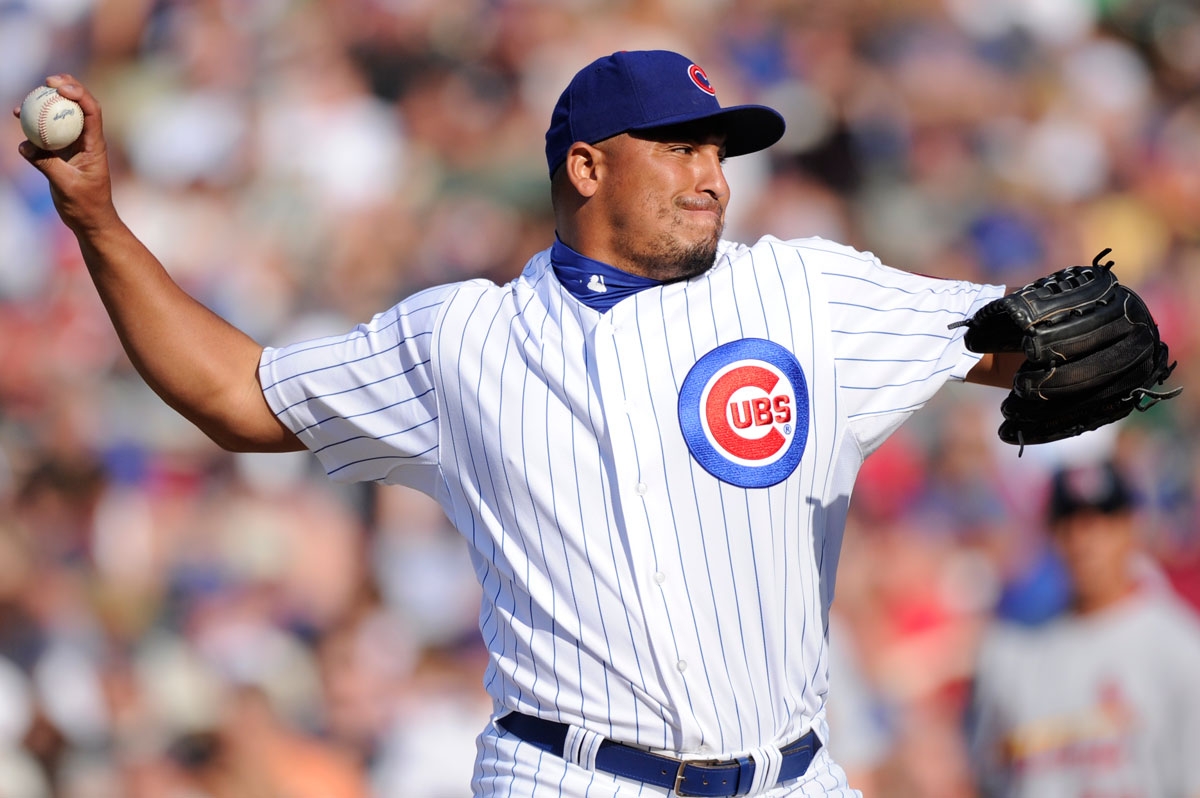
When Carlos Zambrano arrived in Chicago as an 18-year-old signee from Venezuela, he brought a physical presence and a raw intensity that the franchise hadn't seen in years. By 2003, he had locked down a spot in the rotation, helping lead the Cubs to within one win of the World Series. He emerged as a high-velocity prospect and quickly matured into the most durable starter of his era on the North Side. From 2003 to 2008, Zambrano was a model of productivity, standing as the only National League pitcher to record at least 13 wins in six consecutive seasons. He provided the stability of a workhorse for a team that leaned heavily on his arm.
The high-water mark of his residency, and a historic moment for his homeland, arrived in 2006. That season, Zambrano became the first Venezuelan pitcher to lead the National League in wins, a feat that solidified his status as a premier force of the decade. He was a perennial Cy Young contender, finishing in the top five of the voting three times in a Cubs uniform. His top-tier quality was best displayed on a September night in 2008 when, amidst the chaos of a neutral-site game in Milwaukee, he tossed the first Cubs no-hitter in 36 years. He thrived when the lights were brightest and the stakes were at their peak.
What truly separated Zambrano from his peers, however, was his prowess in the batter’s box. He was a legitimate dual-threat asset, batting .241 with 23 home runs during his time in Chicago. A three-time Silver Slugger winner, Zambrano treated his trips to the plate with the same ferocity he brought to the rubber. He holds the franchise record for home runs by a pitcher, famously switch-hitting his way into the highlight reels and often providing his own run support in low-scoring affairs. He was the rare player who could win a game with his arm in the first inning and his bat in the ninth.
To be direct about his tenure, one must acknowledge the emotional volatility that came with his performance. Zambrano played with his heart on his sleeve, a trait that led to famous dugout skirmishes and a reputation for being a challenge to manage. Yet, for the fans at Wrigley Field, that fire was exactly what defined his identity. He spent eleven of his twelve professional seasons anchored to the Cubs, accumulating 125 wins and 1,542 strikeouts before a final, brief chapter in Miami.
Comments powered by CComment