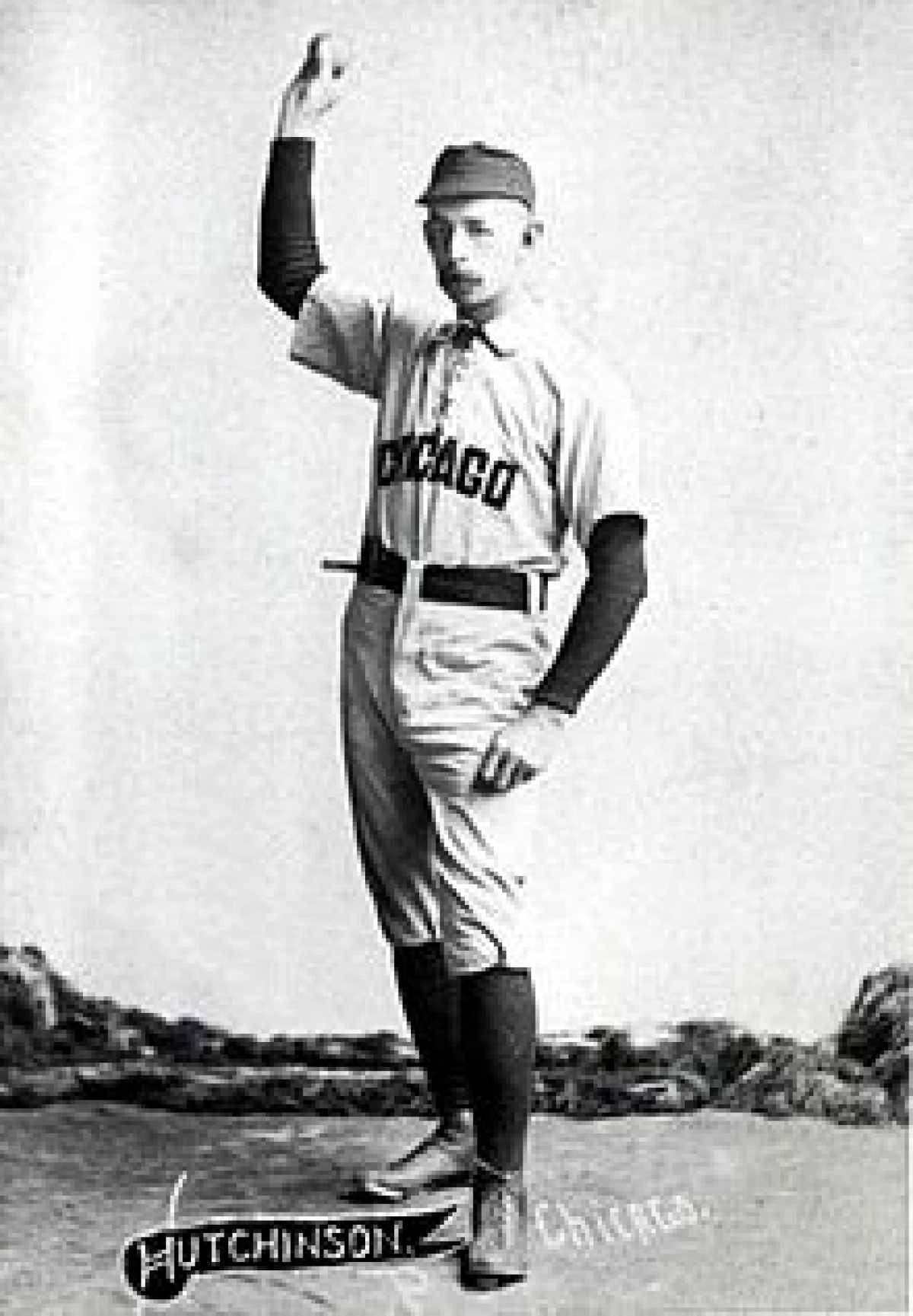
When Bill Hutchinson arrived in Chicago in 1889, the franchise, then known as the White Stockings, was transitioning into the "Colts" era. A Yale graduate with a cerebral approach to a rough-and-tumble game, his true calling card was a rubber arm that seemed immune to fatigue. His residency on the West Side began with a steady introduction, but by 1890, he shifted into a gear that few hurlers in history have ever reached. He arrived as a promising young arm and quickly matured into the most durable pitcher in the sport, leading the National League in innings pitched for three consecutive seasons.
The peak of his tenure arrived during a staggering window between 1890 and 1892. During these three years, Hutchinson was a statistical outlier of the highest order, leading the league in wins each season with totals of 42, 44, and 36, respectively. His dominance of the era was defined by a workload that remains mind-boggling; in 1892 alone, he tossed 622 innings and struck out a league-high 314 batters. He wasn't just a starter; he was a permanent fixture on the mound, providing the stamina that kept the Colts competitive in a rapidly evolving league. During this peak, he was the undisputed king of the rubber, finishing first or second in strikeouts in all three campaigns.
Acknowledging the reality of such a heavy workload, the flame that burned so brightly was destined to flicker out. The incredible stress of throwing over 1,600 innings in just three years eventually eroded his effectiveness. After 1892, Hutchinson’s traditional production began to wane, and he spent his final three seasons in Chicago as a serviceable, though no longer elite, member of the staff. While he was unable to recapture the lightning of his early 20s, the sheer accumulation of his peak years ensured his place in the franchise record books. He finished his Chicago stay with 180 wins and 1,225 strikeouts, a testament to a short, sharp burst of excellence.
The final walk toward the exit for Hutchinson came after the 1895 season, as the massive volume of the early 90s finally brought his career to a close at the age of 31. He left Chicago as a pioneer of the "iron man" era, a player who proved that a single pitcher could carry the weight of an entire organization if his will and his elbow remained strong enough.
Comments powered by CComment