
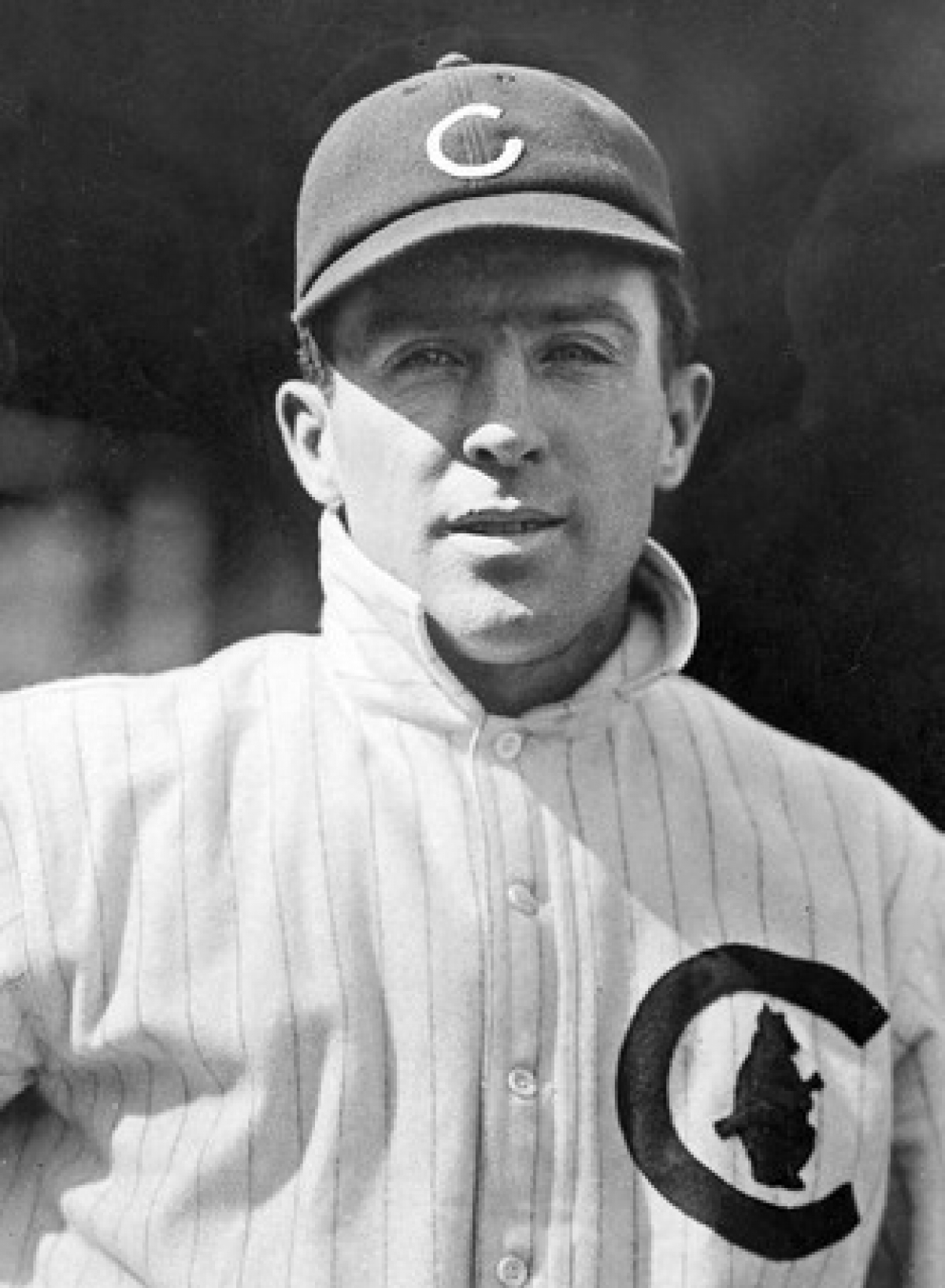

When Joe Tinker arrived in Chicago in 1902, the Cubs were a franchise on the verge of a golden era. He immediately stepped into the starting shortstop role, a position he would hold with an iron grip for the next eleven seasons. While history remembers him as the first link in the "Tinker to Evers to Chance" double-play combination, the reality on the dirt was far more complicated. Tinker and second baseman Johnny Evers famously despised each other, reportedly going years without speaking a word off the field. Yet, when the umpire cried, "Play Ball," Tinker’s professionalism took over. He arrived as a young, agile defender and quickly became the premier shortstop of the Deadball Era, proving that personal friction was no match for championship chemistry.
The peak of his residency was defined by the back-to-back World Series titles in 1907 and 1908. During this stretch, Tinker was a defensive titan, leading National League shortstops in fielding percentage four times and routinely topping the charts in assists and putouts. While his offensive numbers, including a modest .303 on-base percentage, might seem pedestrian by modern standards, he was more than adequate for a Deadball shortstop. He was a clutch performer who collected over 1,400 hits in a Cubs uniform, often delivering the timely knock that a low-scoring Chicago team desperately needed. Without his glove and his occasional bat, the Cubs’ trophy case from that era would likely be far emptier.
He was a five-time leader in defensive bWAR and the runner-up on four other occasions, establishing himself as arguably the greatest defensive player in the sport during his prime. He was the vacuum that allowed the Cubs' legendary pitching staff to thrive, turning countless potential base hits into routine outs. His value wasn't found in home runs or slugging, but in the ground balls that died in his glove and the runners he erased at second base.
The final walk toward the exit in 1912 was a direct result of his fractured relationship with Johnny Evers. When Evers was named player-manager, Tinker demanded a trade, leading to a brief departure from the North Side. However, the gravitational pull of Chicago was too strong; he returned to the city to lead the Chicago Whales of the Federal League, eventually making a final homecoming to the Cubs as a player-manager in 1916 after the leagues merged. It was a fitting, if short-lived, final chapter for a man who had become synonymous with Chicago baseball.
Joe Tinker’s legacy was finally cemented in 1946 when the Old Timers Committee ushered him into Cooperstown. In 2021, the Cubs rightfully included him in their inaugural franchise Hall of Fame class, a long-overdue nod to the man who started the poem but finished the job. He arrived as a scrappy infielder in a new century and left as a permanent monument to the "Hitless Wonders" era. He proved that you don't have to like your teammates to win with them, you just have to be better than everyone else when the ball is hit your way.

Comments powered by CComment