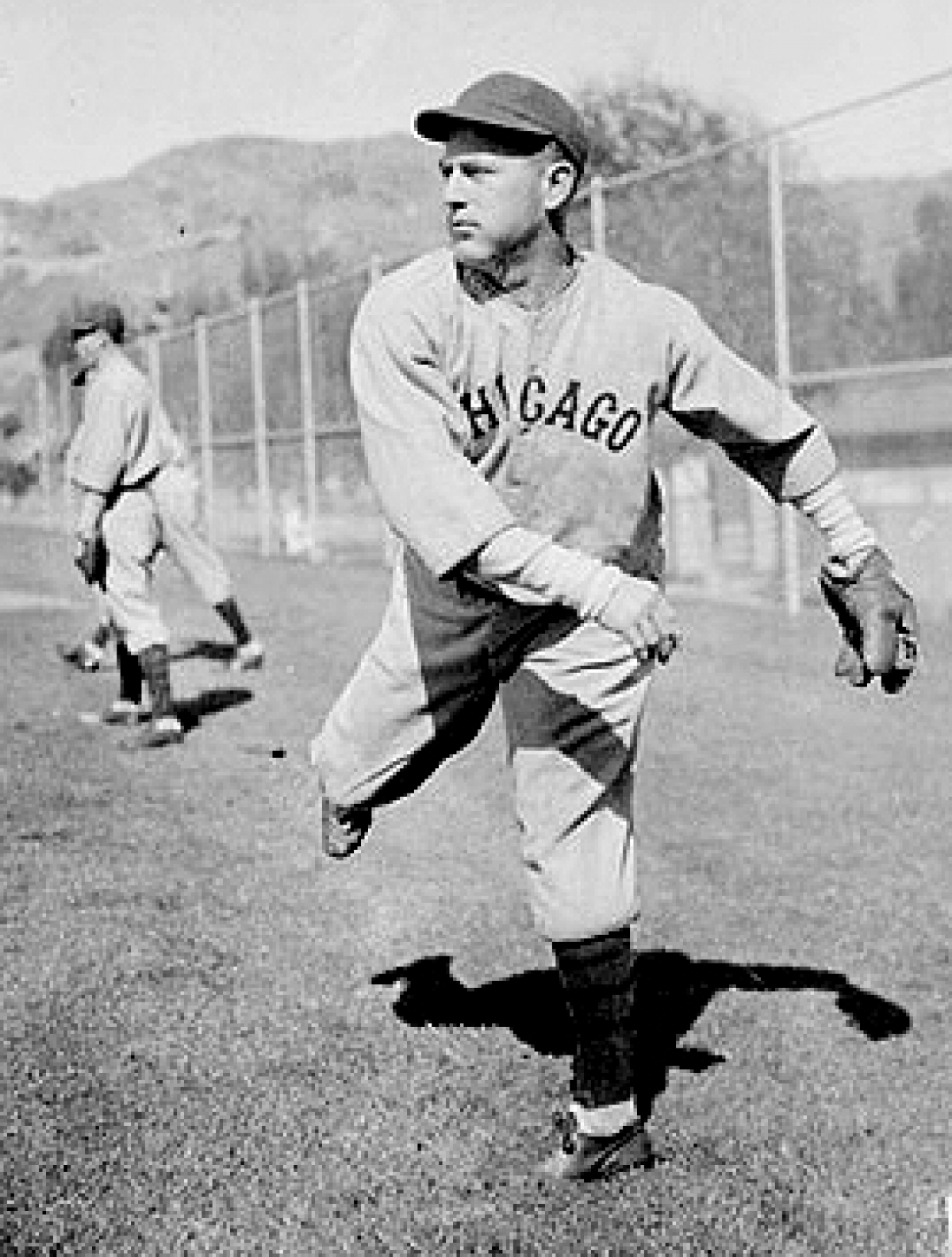
In the long, star-studded history of Chicago Cubs pitching, there are bigger names and flashier legends, but there is only one man at the top of the mountain when it comes to the "W." Charlie Root arrived in Chicago in 1926 as a castoff from the St. Louis Browns, and he spent the next 16 seasons proving that the Browns had made a historic mistake. His story is one of pure, unadulterated durability, who in every sense of the word took the ball more often, threw more innings, and walked off the mound a winner more times than any other pitcher to ever wear the blue pinstripes.
His arrival was a baptism by fire. In his first full season in 1926, Root led the league in losses, but he also showed flashes of the brilliance to come with 18 wins. The true breakout, the moment he became the undisputed ace of the staff, arrived in 1927. In a performance that earned him a fourth-place finish in the MVP voting, Root led the National League with 26 wins, serving as the high-velocity engine for a Cubs team that was suddenly a perennial contender. For the next six years, Root was the model of metronomic consistency, never dipping below 14 wins and serving as the foundational piece of the rotation.
As the 1930s progressed, Root’s play evolved. He transitioned from the young firebrand at the top of the rotation to the veteran stabilizer in the bullpen, proving that his value to the franchise was immune to the passing of time. By the time he threw his final pitch in 1941, he had amassed a franchise-record 201 wins and tossed an incredible 3,137 innings. He left the game as the Cubs' all-time leader in games pitched and Win Probability Added, a statistical titan whose legacy was built on showing up, every single day, for nearly two decades.
The story reached its permanent acknowledgment in 2021. When the Cubs finally opened the doors to their own Hall of Fame, Charlie Root was an automatic selection for the inaugural class. He arrived as a young pitcher with a point to prove and left as the winningest hurler in the franchise's history, the man who defined what it meant to be a Chicago Cub on the mound.
Comments powered by CComment