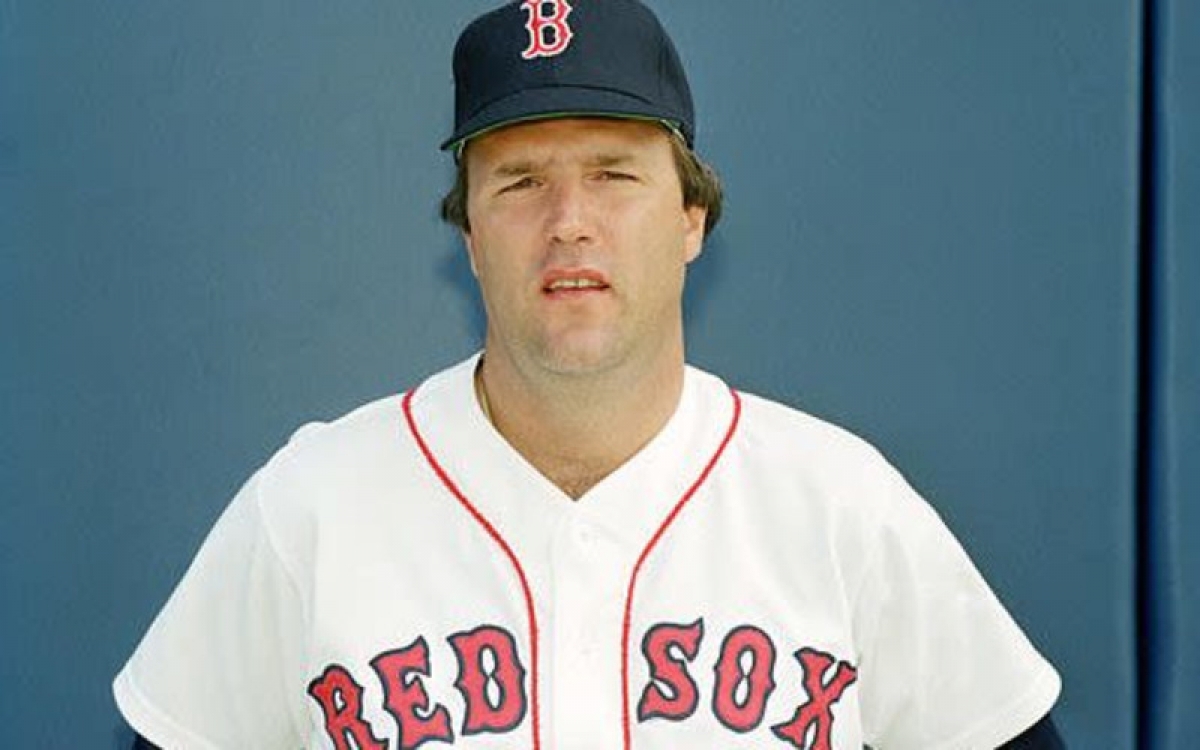
Bob Stanley’s story in Boston is one of relentless availability. Drafted as a first-round talent in 1974, he debuted in 1977 and immediately established a pattern of being whatever the Red Sox needed on a given afternoon. He didn't just play for 13 seasons; he lived in the game, eventually setting a franchise record with 637 appearances.
The late 70s and early 80s saw Stanley authoring efficiency peaks from every imaginable angle. In 1978, he produced a statistical anomaly, going 15–2 primarily out of the bullpen and finishing seventh in the Cy Young voting. He followed that in 1979 by moving into the rotation full-time, starting 30 games and earning his first All-Star nod. However, his most historic season came in 1982, when he set an American League record by throwing 168.1 innings in relief. To put that in perspective, that is the workload of a modern starter delivered entirely from the bullpen.
By 1983, the "Steamer" had pivoted again, this time becoming the premier closer in the American League. He saved a then-franchise record 33 games and earned his second All-Star selection, finishing near the top of the Cy Young and MVP ballots. This ability to lead the team in wins one year and saves the next is a rarity that few pitchers in history have replicated. Even during the high-leverage pressure of the 1986 postseason, Stanley remained the man the manager trusted most to bridge the gap to a title.
Though he retired in 1989 as a "Lifer" with 115 wins and 132 saves, Stanley’s impact was best summarized by his nickname. He was the engine that kept the Red Sox running through three different decades. He was a pioneer for the "Most Versatile Pitcher" role, a man who would throw ten innings of relief one night and start on three days' rest the next. Inducted into the Red Sox Hall of Fame in 2000, Bob Stanley remains the definitive proof that the most valuable ability in a long career is availability.
Comments powered by CComment