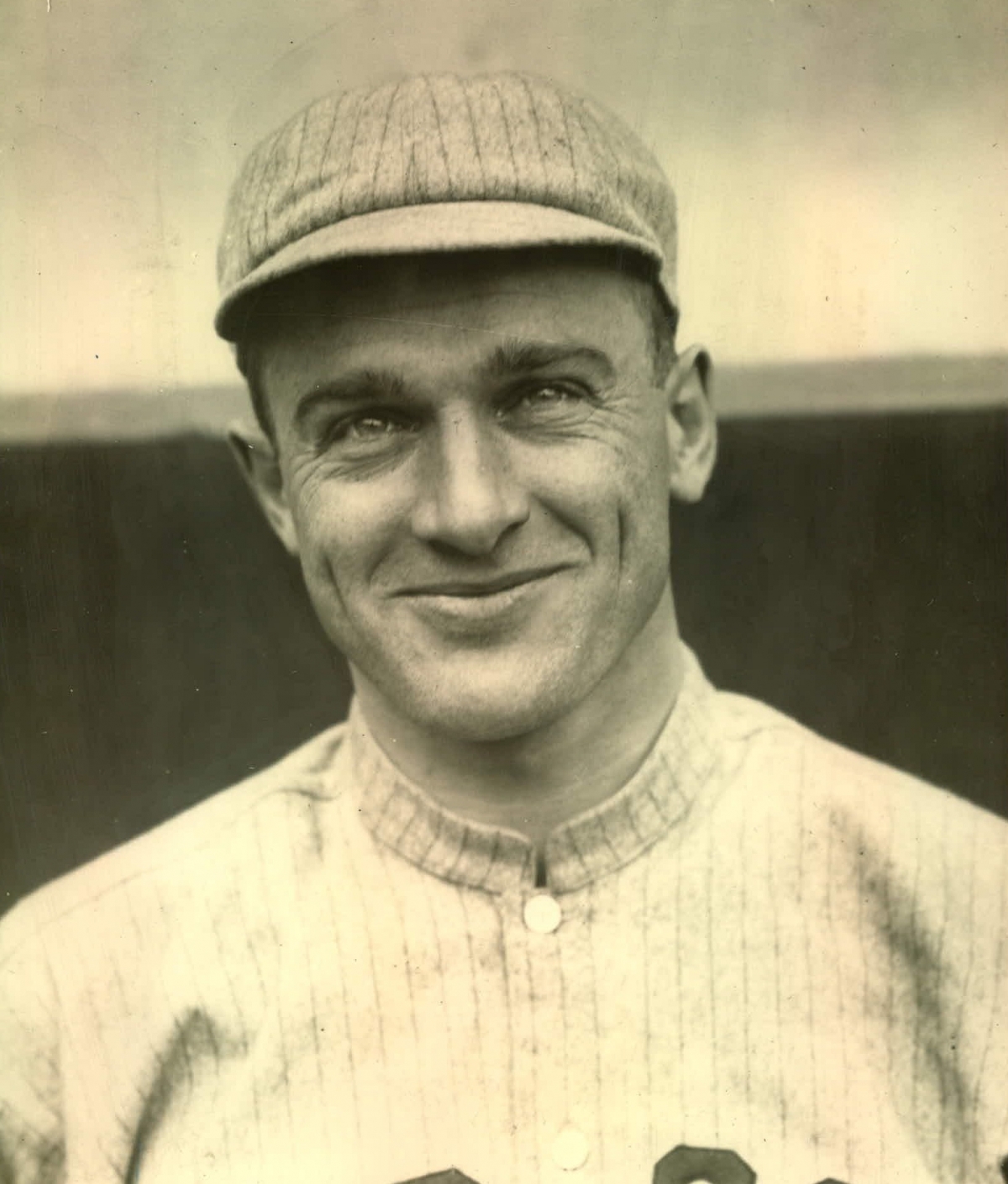
Larry Gardner arrived in Boston in 1908 as a lost kid from the green hills of Vermont, but he quickly became a foundational piece of a powerhouse. By 1910, he had earned his spot as the starting second baseman, but it was his move to the hot corner in 1911 that defined his legacy. Gardner wasn't just a third baseman; he was a tactical defender whose prowess in fielding bunts drew comparisons to the legendary Jimmy Collins. In an era where small ball was king, Gardner’s glove was a high-leverage weapon that protected thin leads and stifled rallies.
The 1912 season remains Gardner's best year in a Red Sox uniform. He batted .315 and led the team with 86 RBIs, but it was his October heroics that etched his name in Fenway lore. Despite playing with a broken finger on his throwing hand, he delivered the Series-winning sacrifice fly in the 10th inning of Game 8 against the New York Giants. That moment, scoring Steve Yerkes off the great Christy Mathewson, remains one of the most clutch performances in the history of the Fall Classic.
As the decade progressed, Gardner remained the steady pulse of the "Impossible Dream" of the 1910s. He was a central figure in the 1915 and 1916 championships, proving his rare power surge in the 1916 Series. Facing the Brooklyn Robins, he launched two home runs—including a dramatic three-run inside-the-parker—matching his entire regular-season home run total in just five games. This ability to elevate his game when the stakes were highest made him an indispensable figure for the club's first golden age.
Though he was traded to Philadelphia after the 1917 season, Gardner’s impact on Boston was indelible. He left the franchise with 1,106 hits, a .282 average, and three rings. He would eventually win a fourth title with Cleveland, but his heart remained tied to the Northeast, where he eventually returned to coach at his alma mater, the University of Vermont. Inducted into the Red Sox Hall of Fame in 2000, Gardner is remembered as the "Vermont Marvel”, a player whose career was defined by winning, stability, and the ability to come through when the city of Boston needed him most.
Comments powered by CComment