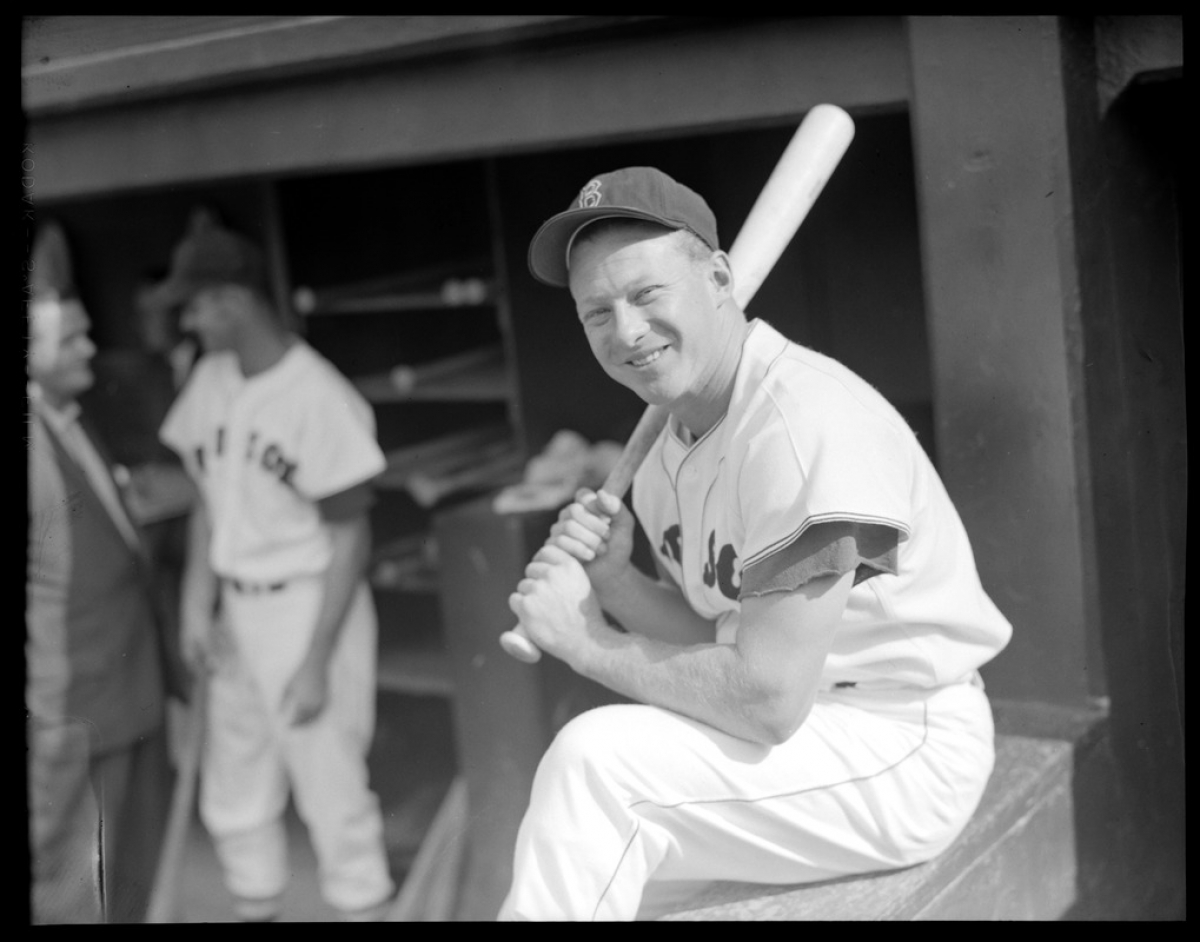
Before he ever stepped into the batter’s box at Fenway Park, Jackie Jensen was already a myth. He arrived in Boston in 1954 via trade from the Senators, carrying a resume that sounded like a tall tale: the first man to play in a Rose Bowl, a World Series, and an MLB All-Star Game. But while his athleticism was legendary, it was in a Red Sox uniform that he finally channeled that raw talent into sustained, elite dominance.
From the moment he arrived, Jensen became the engine of the Boston offense. For six consecutive seasons, he was the model of run-producing consistency, never dipping below 20 home runs and driving in at least 100 runs in five of those years. He didn't just participate in the American League leaderboards; he owned them, leading the league in RBIs three separate times. The pinnacle of this "Golden Boy" era came in 1958, an MVP campaign where he reached career highs in home runs (35) and OPS (.931), proving he was the premier run-producer in the junior circuit.
However, the story of Jensen’s run with the team is also one of internal conflict. At the height of his powers in 1959, coming off another RBI title, he stunned the baseball world by walking away. Driven by a deep desire to be with his family in California and an intensifying, paralyzing fear of flying, he chose peace over the diamond.
He attempted a brief, one-year comeback in 1961, but the "Golden Boy" couldn't outrun the anxiety of the travel schedule. He retired for good that year, leaving behind a stat line—170 home runs and a .282 average—that suggested he had so much more left to give. It took decades for the franchise to fully recognize the weight of his contributions, finally inducting him into the Red Sox Hall of Fame in 2000. He remains one of the great "what-ifs" in Boston history: a man who conquered every sport he touched, only to be grounded by the very skies that carried him to greatness.
Comments powered by CComment