
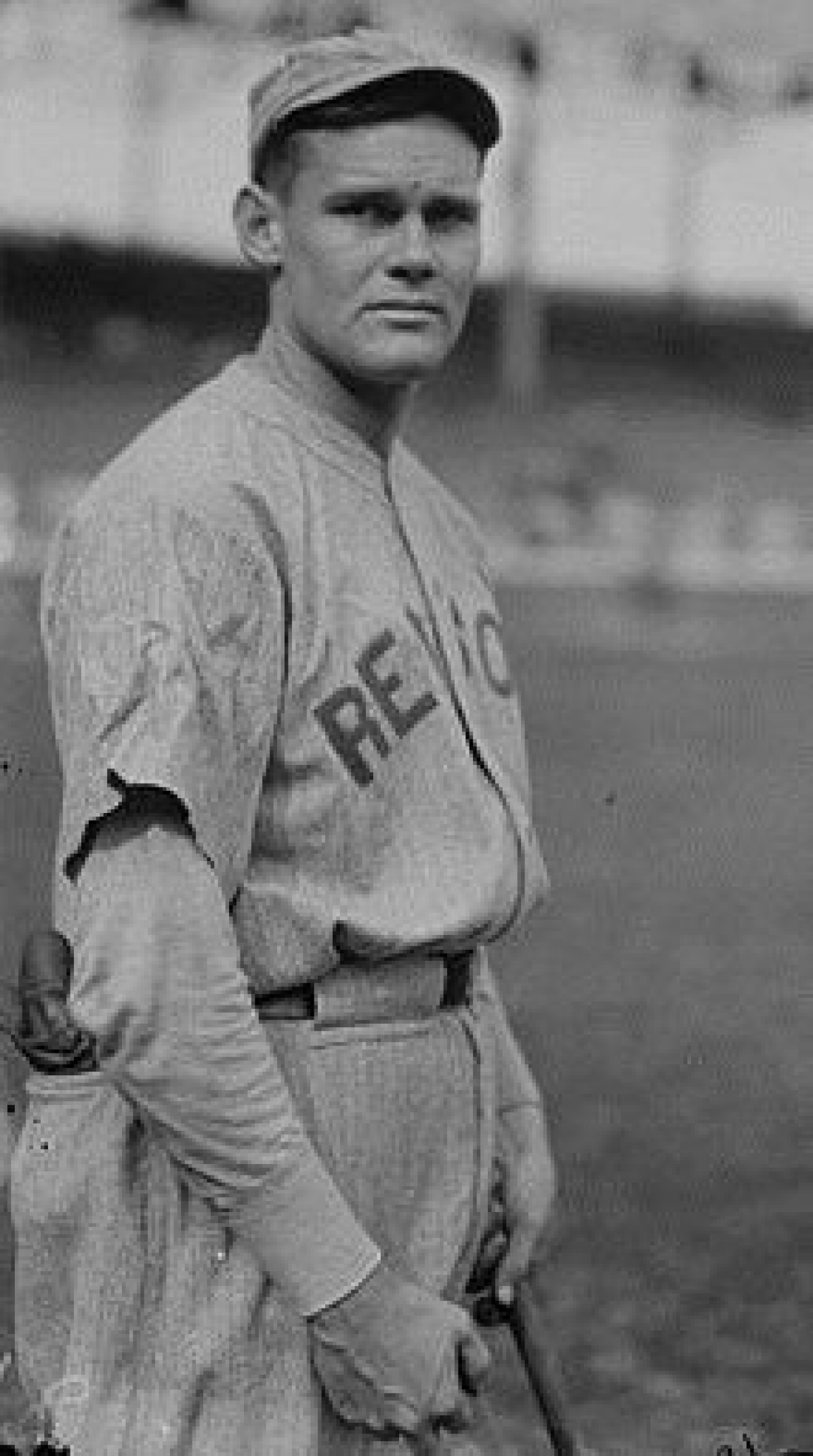


Hubert "Dutch" Leonard arrived in Boston in 1913 and immediately established himself as a left-handed force. Following a stellar rookie campaign, he authored a sophomore season in 1914 that defies modern comprehension. Leonard went 19–5 and set a Major League record with a 0.96 ERA—a mark that remains the lowest in the live-ball or deadball era for any pitcher with at least 200 innings paired that microscopic ERA with league-leading marks in FIP (1.95), WHIP (0.886), and Strikeouts per 9 (7.1).
Leonard was the engine behind the 1915 and 1916 World Series titles. While the Red Sox rotation was deep, Leonard was their postseason "Closer" before the role existed. He was a collective 2–0 with a 1.00 ERA in Fall Classic play, including a brilliant performance in 1915, where he helped dismantle the Phillies. His ability to maintain a 2.13 career ERA in Boston during a stretch when he faced some of the greatest contact hitters in history marks him as a premier talent.
His story is one of peak brilliance followed by the era's typical roster churn. Before his famous feud with Ty Cobb in Detroit or his move to the Yankees, Leonard was the left-handed anchor of Fenway Park. He threw two no-hitters in a Red Sox uniform, one in 1916 and another in 1918, joining an elite tier of "hurlers who possessed the ‘swing-and-miss' stuff necessary to dominate without the help of his defense.
Leonard left Boston with a 90–64 record and 771 strikeouts. Though his tenure was shorter than some of the "Lifers" in the Lab, his concentration of excellence was so high that he was finally inducted into the Red Sox Hall of Fame in 2012.

Comments powered by CComment