
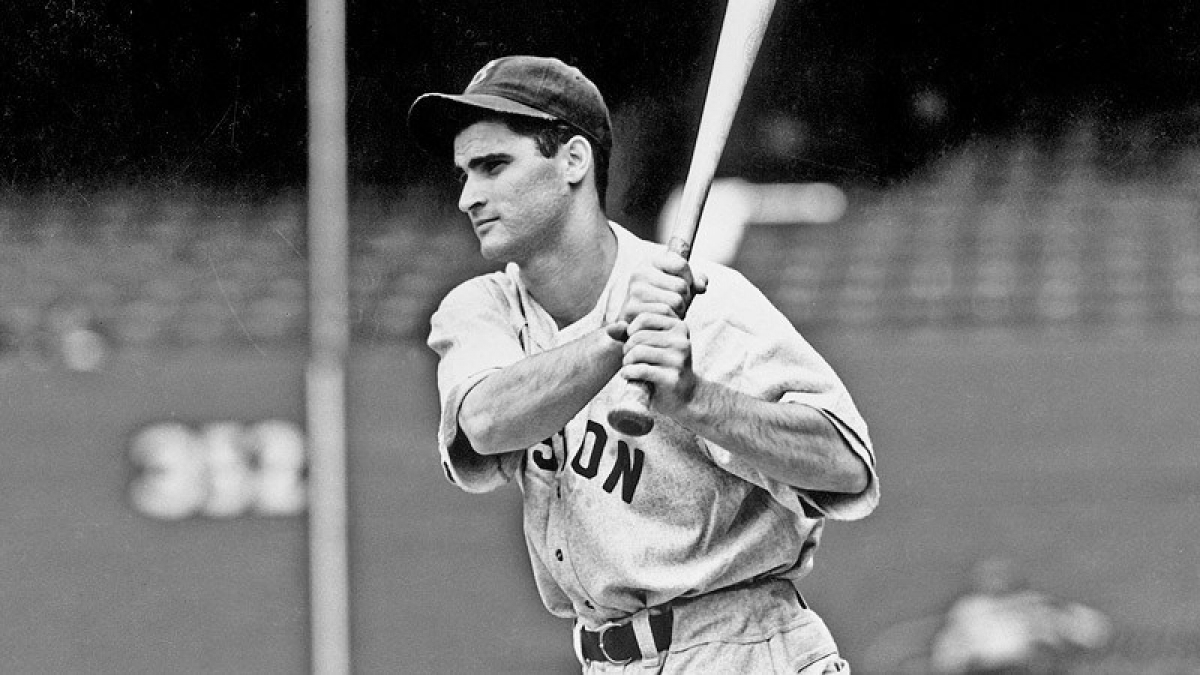





Bobby Doerr was the steady engine of the Red Sox for the entirety of his 14-year Major League career (1937–1951). Arriving as a teenager, he became a permanent fixture at second base by 1938 and quickly earned a reputation as one of the most reliable defensive infielders in the game. A nine-time All-Star, Doerr was the "Silent Captain" of the legendary Teammates era, providing a consistent glove and a surprisingly potent bat that made him a premier offensive threat at his position.
Doerr’s offensive peak showcased a rare combination of average and power for a middle infielder. He batted over .290 six times and was a consistent run producer, recording six seasons with over 100 RBIs. His 1944 campaign stands out as a masterpiece of efficiency; despite the war-depleted rosters, Doerr led the American League with a .528 Slugging Percentage and finished a close second in the batting race at .325. This elite production earned him significant MVP attention throughout the decade, including a career-best third-place finish in 1946.
Defensively, Doerr was the gold standard of his era. He led AL second basemen in double plays five times and fielding percentage four times, once handling 414 consecutive chances without an error— a staggering record at the time. Whether it was his range or his reliable hands, his defensive metrics as a high-floor anchor for Boston squads/ Even when his career was cut short at age 33 due to spinal issues, he had already amassed 2,042 hits and 223 home runs, totals that ranked him among the greatest offensive second basemen in history at the time of his retirement.
Like many of his peers, Doerr’s career included a sacrifice for his country, as he missed the 1945 season to serve in the U.S. Army. He returned in 1946 without missing a beat, driving in 116 runs and leading the Red Sox to the World Series, where he batted a brilliant .409 in the seven-game set.
In 1986, the Veterans Committee officially recognized Doerr's greatness with an induction into the Baseball Hall of Fame. That same year, the Red Sox honored him by retiring his Number 1, and he was fittingly included in the inaugural class of the Red Sox Hall of Fame in 1995.

Comments powered by CComment