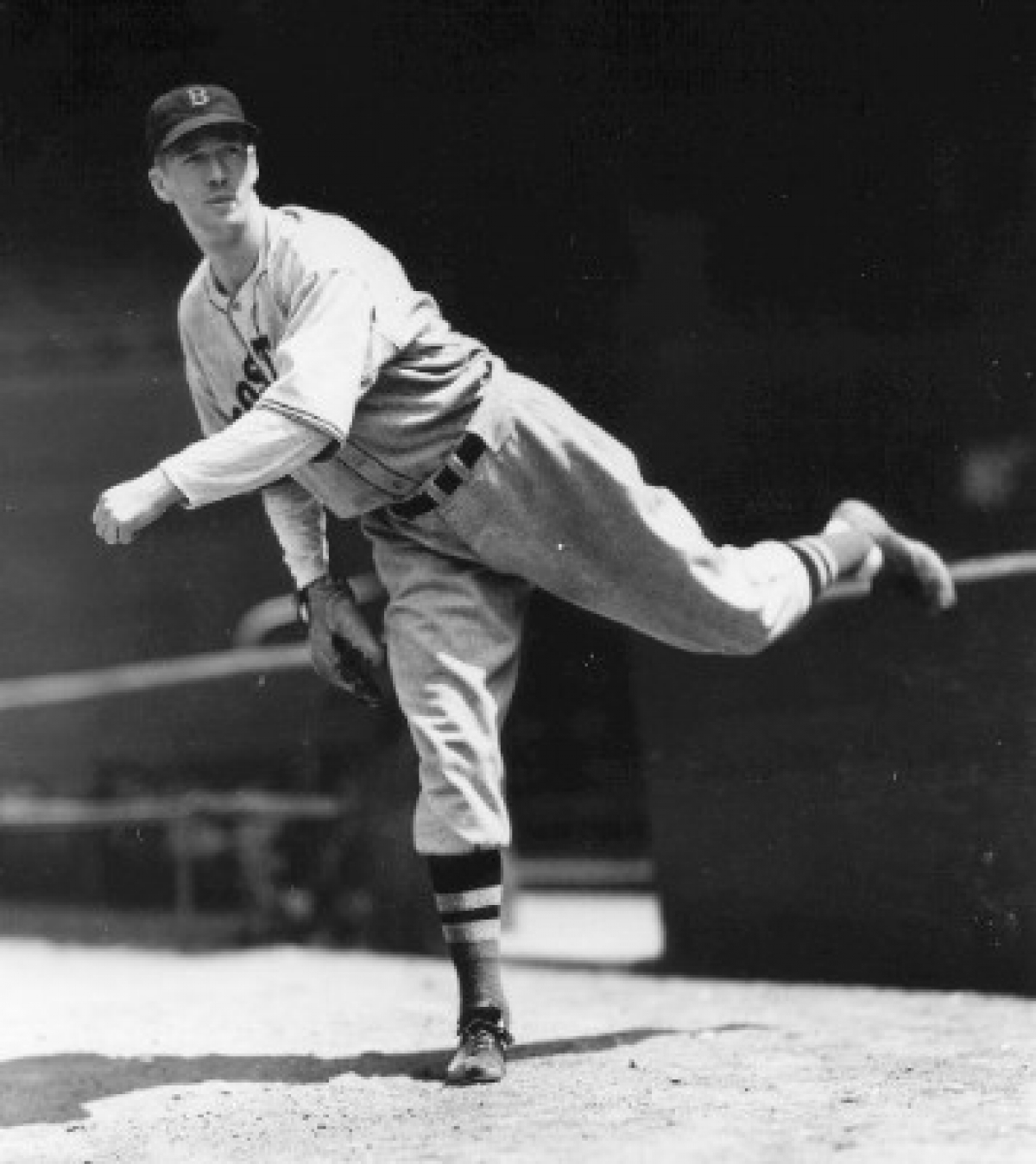
Lefty Grove arrived in Boston in 1934 under the shadow of a "fire sale" in Philadelphia and a disastrous first year at Fenway. Initially, it appeared the legendary southpaw was finished; plagued by arm trouble, he struggled to an 8–8 record and a career-worst 6.50 ERA. However, what followed was one of the most remarkable transformations in pitching history. Grove abandoned the raw power that had defined his youth and reinvented himself as the craftiest pitcher in the American League.
From 1935 to 1939, Grove became a statistical anomaly. Despite being in his mid-to-late 30s, he secured four ERA titles for the Red Sox (1935, 1936, 1938, and 1939). Even more impressive in advanced metrics, Grove led all AL pitchers in bWAR for three consecutive seasons (1935–1937), proving he was the most valuable arm in the league long after his supposed expiration date.
Though his strikeout totals dipped, Grove’s efficiency skyrocketed. He remained the staff ace for a Red Sox team on the rise, providing a veteran anchor for a clubhouse that would soon include icons like Ted Williams and Bobby Doerr. On July 25, 1941, at the age of 41, Grove achieved one final milestone in a Boston uniform: his 300th career victory, a 10–6 complete-game win over the Cleveland Indians at Fenway Park. It would be the final win of his career, a moment of legacy that cemented his status as a titan of the sport.
Grove retired after the 1941 season with a Boston record of 105–62, a winning percentage (.629) that showcased his ability to win even when he wasn't at his physical peak. Inducted into the Baseball Hall of Fame in 1947, he was later named a charter member of the Boston Red Sox Hall of Fame.
Comments powered by CComment