
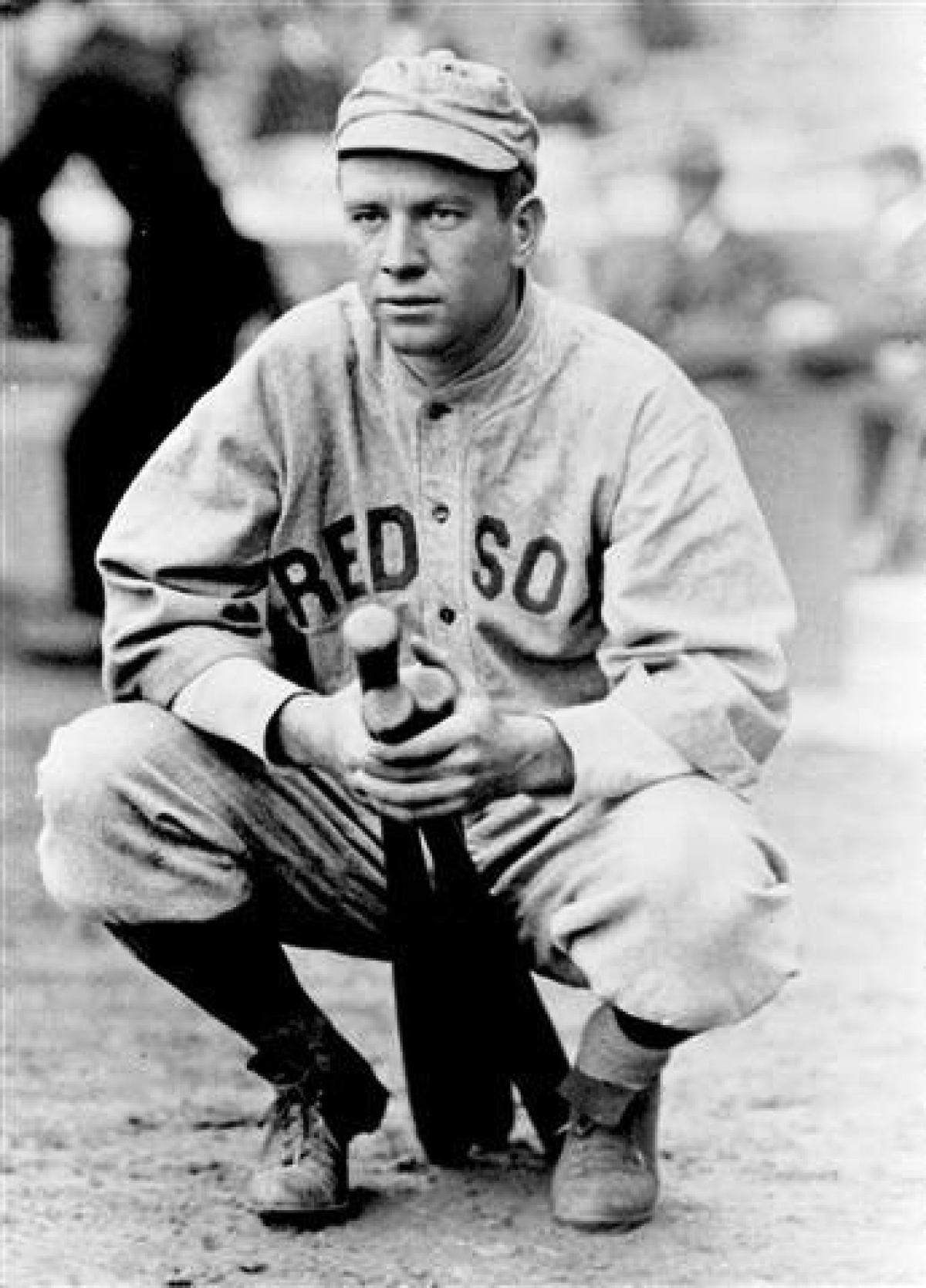


The Hall of Fame career of Tris Speaker began in Boston, where he debuted in 1907 and quickly entrenched himself as the starting center fielder by 1909. Known as the "Grey Eagle," Speaker revolutionized the position by playing an exceptionally shallow center field, a defensive innovation that allowed him to turn triples into outs and lead the league in outfield assists. Offensively, he was just as dominant, batting .309 in his first full season and embarking on a decade-long stretch where he became a fixture at the top of the American League leaderboards.
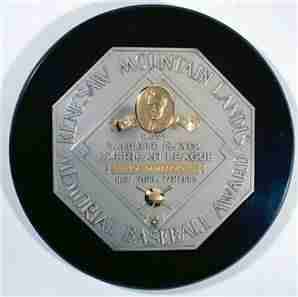
Speaker’s 1912 campaign stands as one of the greatest individual seasons in Red Sox history. That year, he batted a staggering .383 and led the American League in Doubles (53), Home Runs (10), and On-Base Percentage (.464). This rare power-and-patience profile earned him the AL MVP (Chalmers Award) and propelled Boston to a World Series Championship. His discipline was legendary; after 1910, Speaker never produced an OBP under .400 during his tenure in Boston.
Speaker was the engine behind two World Series titles in Boston (1912 and 1915), providing the clutch hitting and leadership that defined the franchise's early golden age. However, a contract dispute before the 1916 season led to a blockbuster trade to the Cleveland Indians, a transaction that Boston fans and historians would regret for generations. Despite the change of scenery, Speaker's impact on the Red Sox record books remained, leaving the city with 1,327 hits and an elite slash line of .337/.414/.482.
Speaker continued his assault on the record books in Cleveland, amassing another 1,965 hits and retiring as the all-time MLB leader in Doubles with 792, a record that still stands today. His defensive metrics were equally historic, as he remains the all-time leader in assists and double plays among center fielders.
Inducted into the Baseball Hall of Fame in 1937 (with the formal ceremony in 1939), Speaker was also honored as a charter member of the Boston Red Sox Hall of Fame.

Comments powered by CComment